

Project at a glance
Personalized medicine makes cancer treatments complex—but clear decisions remain crucial nonetheless. The Swiss Onco-Pathhelper is an innovative project at the intersection of medicine, data science, and artificial intelligence that addresses this very issue. The goal is not only to digitize oncology guidelines but also to structure them in an understandable way and link them directly to real-world patient pathways from clinical practice.
Through intelligent visualizations and automated comparison between guidelines and actual treatment, the Swiss Onco-Pathhelper creates transparency in everyday clinical practice. Healthcare professionals receive targeted support, deviations become visible, and complex treatment decisions can be made with greater confidence.
Another benefit: Comparing guideline recommendations with actual treatment costs makes it possible to better estimate and manage costs—without losing sight of the quality of care.
In this way, the Swiss Onco-Pathhelper helps to sustainably improve quality, efficiency, and safety in oncology care.
Project
Swiss-Onco PathhelperLead
Institute for Data Analysis, Artificial Intelligence, Visualization, and Simulation (DAViS) More about Institute for Data Analysis, Artificial Intelligence, Visualization, and Simulation (DAViS)Project Leader
Staudt Yves More about Staudt YvesInvolved parties
Kantonsspital Graubünden
Tumorzentrum GraubündenTeam
Marxer Curdin More about Marxer CurdinResearch fields
AI for structured and unstructured Data More about AI for structured and unstructured Data Visualization and Dashboards More about Visualization and DashboardsFunding
Ehmann Savognin FoundationDuration
October 2025 – October 2027
Background
Healthcare costs are rising worldwide—and particularly sharply in Switzerland. Hospitals are under increasing pressure: They must provide highly complex treatments, such as cancer care, while ensuring both efficiency and quality.
At the same time, the complexity of oncological therapies is constantly increasing. Modern precision oncology, targeted therapies, and personalized treatment decisions require in-depth, up-to-date expertise.
In this context, guidelines are intended to provide clarity and ensure consistent, evidence-based treatment. However:
- Their scope is constantly expanding.
- They are usually presented as narrative texts or flowcharts.
- Medical staff have little time to study them in full.
- Studies show that only about 50% of patients are actually treated in accordance with the guidelines.
The situation is particularly complex in the canton of Graubünden as well, since many internal and external providers are involved in oncology care.
At the same time, a nationwide preliminary study showed:
Healthcare statistics data inadequately reflect treatment pathways because they lack finely granular, structured process information over time. This makes it difficult to reconstruct actual patient pathways and limits quality measurement. Consequently, it is difficult to determine the impact on costs.
Project objective
The Swiss Onco-Pathhelper aims to develop a digital assistant that automatically captures and structures oncology guidelines and visualizes them in an interactive tool alongside real patient pathways.
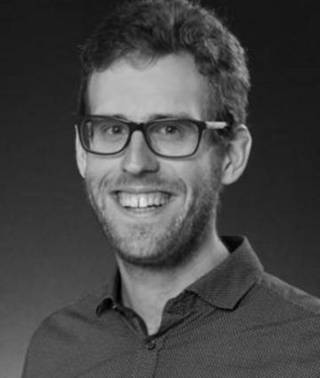
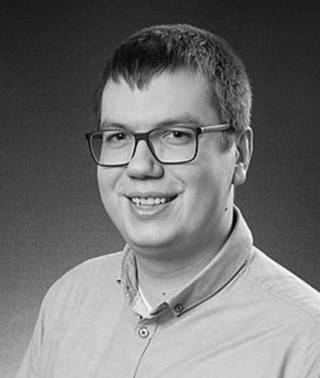
The project has also been supported by the following individuals:
- Prof. Dr. med. Roger von Moos (FMH Medical Oncology, Internal Medicine) – Director of the Tumor and Research Center, Kantonsspital Graubünden
- Lucas Basler – Senior Radiation Oncologist, Data Scientist, Business Analyst, and Project Manager – Artificial Intelligence (AI), Kantonsspital Graubünden
- Rosaria Tino-Corrado – Assistant at the Tumor and Research Center, Kantonsspital Graubünden
- Prof. Dr. Joël Wagner – Full Professor at the University of Lausanne (HEC), Director of the Department of Actuarial Science, Member of the Board of Directors of Retraites Populaires and LALUX Assurances
- Selina Steiner – Intern atthe Institute for Data Analysis, Artificial Intelligence, Visualization, and Simulation (DAViS), under the supervision of Prof. Dr. Yves Staudt
Participants
The project was carried out by the Institute for Data Analysis, Artificial Intelligence, Visualization, and Simulation (DAViS) in collaboration with the Kantonsspital Graubünden.