

Project at a glance
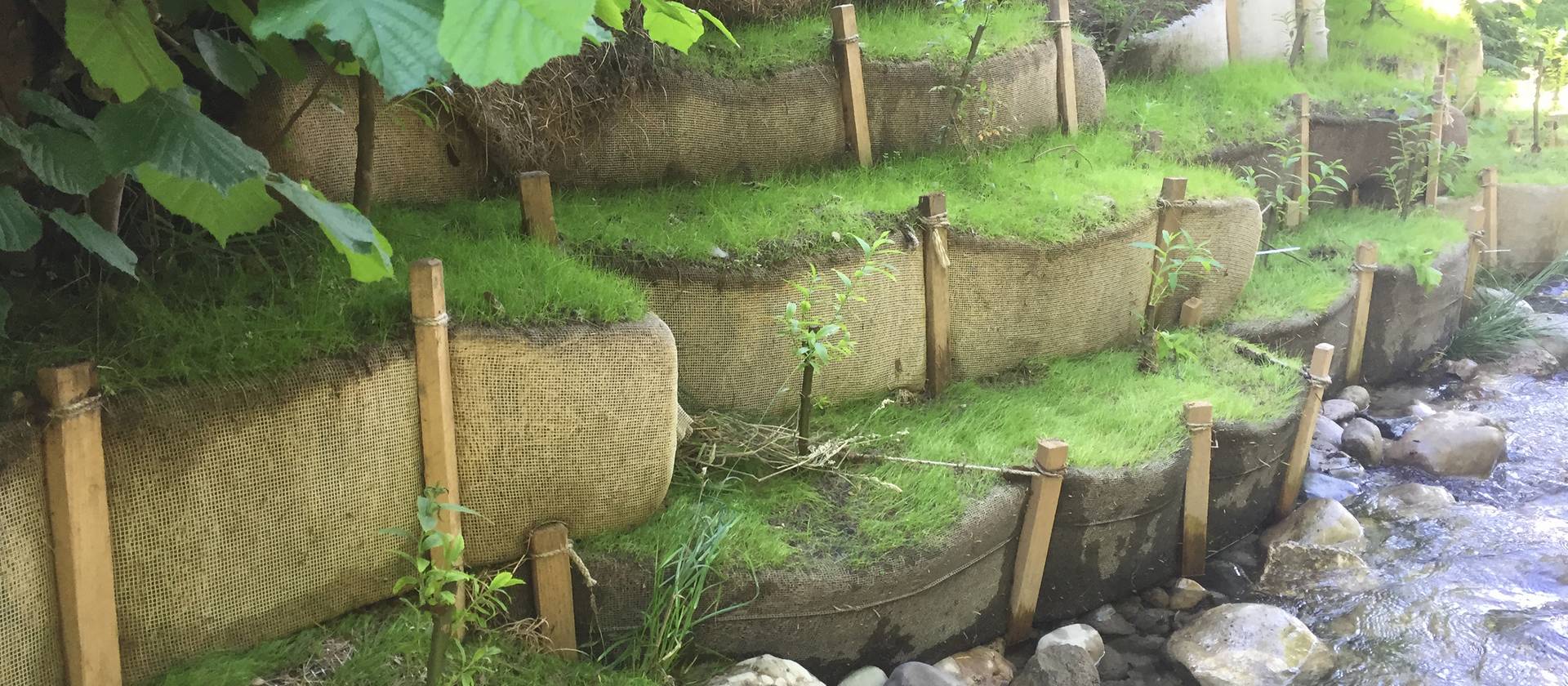
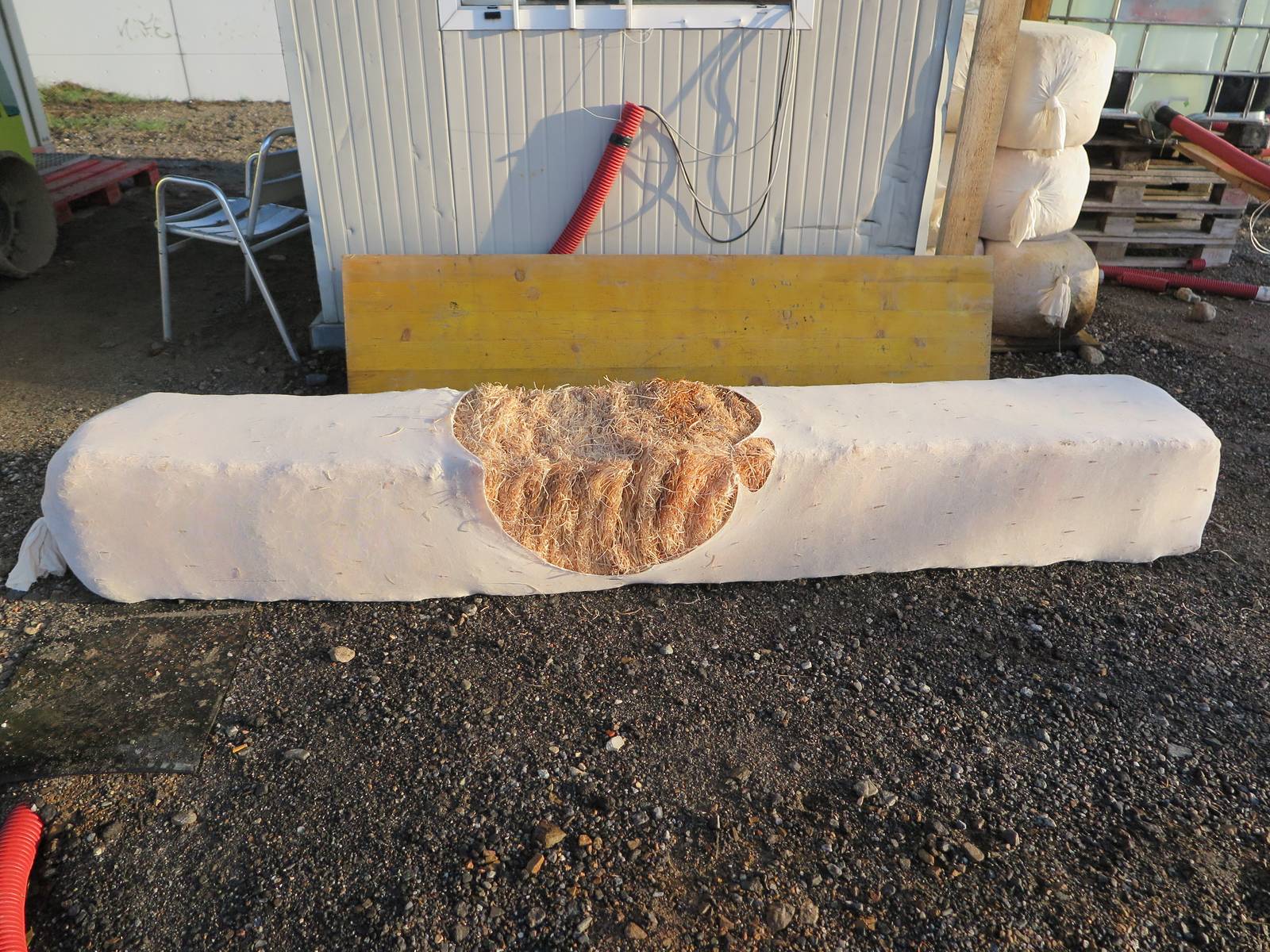
Increasingly extreme weather events often lead to unstable embankments. With the newly developed wood wool fascines, a natural, sustainable solution for slope and bank stabilization was developed. Their successful use during the project is testimony to its success.
Project
Wood wool fascines for sustainable slope and bank protectionLead
Institute for Building in the Alpine Region (IBAR) More about Institute for Building in the Alpine Region (IBAR)Involved parties
Lindner Suisse GmbH, SUPSI-ISTResearch fields
Alpine infrastructure buildings More about Alpine infrastructure buildingsFunding
Innosuisse, Lindner Suisse GmbHDuration
April 2021 - January 2025
Initial situation
For over ten years, Lindner Suisse GmbH has been developing innovative engineered wood wool products for general civil engineering, which are manufactured from Swiss wood at the company's headquarters in Wattwil. The third research project described here was carried out by the Institute for Building in the Alpine Region (IBAR) at the University of Applied Sciences Graubünden.
Project objective
Several promising pilot tests with wood wool fascines have already been carried out, but there was a lack of scientific research to determine the framework conditions and the limits of possible applications. With the help of laboratory and field tests, the aim was therefore to find out how the Q-machines have to be constructed and used in order to achieve a stabilizing effect on the banks and slopes in the different inclination classes. Based on the results, the application of future slope and bank stabilization with wood wool machines could then be determined.
Implementation
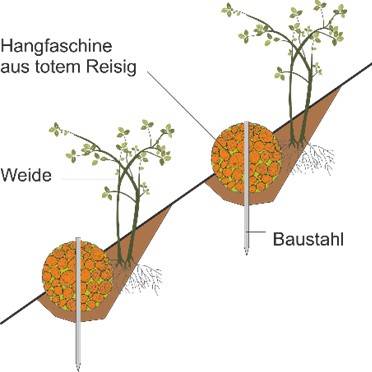
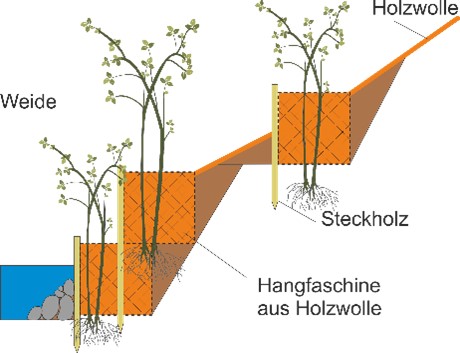
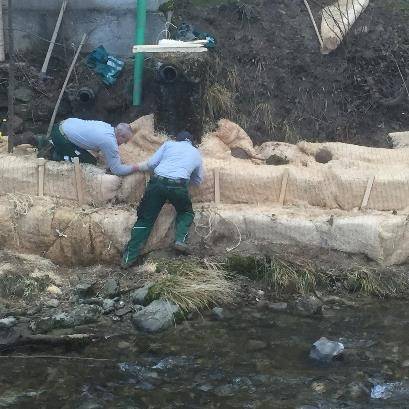
The investigations included the creation of a large-scale laboratory test and three pilot projects. For the large-scale laboratory test, a slope was acquired which had the same exposure everywhere but different angles of inclination, varying from 25° to 45°. For each angle of inclination, one strip of wood wool fascines and one strip of deadwood fascines were installed for direct comparison. The data recording was rounded off with regular photos from installed cameras and measuring devices for recording soil moisture and soil temperature. The three pilot projects were all carried out along a watercourse. The aim of these pilot projects was to gain experience with the individual use of wood wool fascines on site. In addition to the field tests, laboratory tests were carried out to determine the material properties - for example pH values, biological resistance or compressive strength.
Results
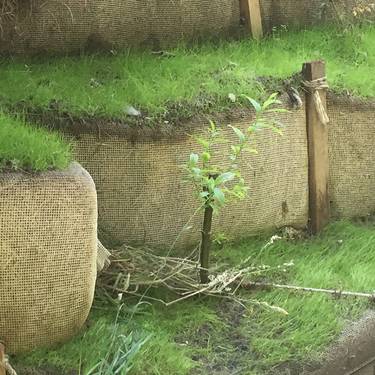
All trial installations, i.e. large-scale laboratory trials and pilot projects, were regularly examined in the field during the test period by means of scans, drone images and with regard to their degree of greening. We paid particular attention to the development of the plant species used as well as their accompanying flora. Furthermore, factors such as the establishment behavior of the plants in the wood wool fascines and the rotting behavior of the fascines under the influence of weather conditions were also observed. The purpose of the fascines was to provide support for the plant cuttings (mostly willow) at the beginning of the installation. As the willow roots grow, the fascines rot, gradually releasing substrate to the cuttings. Eventually, after a few years, the fascines are no longer visible - the slope or bank is secured by the strongly rooted plants. At the end of the project, the fascines were still mostly intact. We expect the rotting process to take around 5 to 6 years. Enough time for the plants to develop well.




Participants
The project was implemented by the Institute for Building in the Alpine Region (IBAR). The project was financed by Innosuisse.