

Project at a Glance
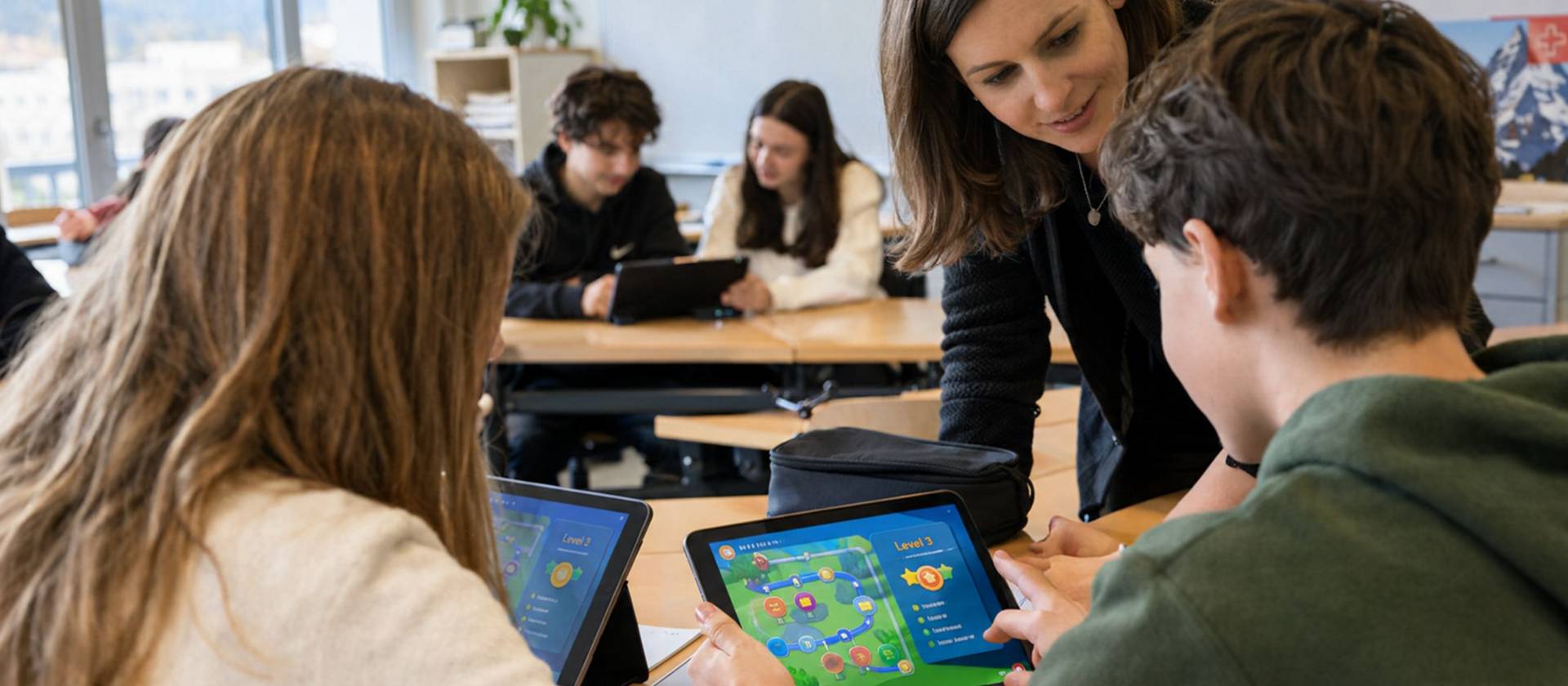
In the MediaQuest project, we are developing an interactive, gamified teaching and learning tool that helps young people learn to navigate digital media environments confidently and independently. The project has two pillars:
- A platform for acquiring media literacy skills and
- workshops for real-world application of the skills learned, which help students become competent creators and consumers of media.
MediaQuest is being developed and tested in collaboration with schools, teachers, and industry partners across several cantons. Once developed, it will be made available to secondary schools throughout Switzerland as an Open Educational Resource (OER).
Project
MediaQuest – Strengthening Social Cohesion Through Digital Media LiteracyLead
Institute for Multimedia Production (IMP) More about Institute for Multimedia Production (IMP)Project Leader
Klug Daniel More about Klug DanielInvolved parties
Christoph Blank, Céline MeierTeam
Drews Sebastian More about Drews Sebastian Schlote Elke More about Schlote Elke Gut Dominik More about Gut DominikResearch fields
Media Use and Production in Convergent and Dynamic Media Environments More about Media Use and Production in Convergent and Dynamic Media EnvironmentsFunding
Federal Social Insurance Office, Sophie and Karl Bindung Foundation, Mercator Switzerland Foundation, Milton Ray Hartmann FoundationDuration
November 2026 – October 2028
Background
Children and teens use digital media every day as a matter of course. In doing so, they are constantly—and often unconsciously—confronted with situations in which they must make decisions and assess: Is this content credible? Where does this information come from? How do platforms influence my perception? How do I deal with distressing content, pressure, or conflicts online?
This creates a practical problem in everyday life: media literacy alone isn’t enough if young people can’t directly translate it into action. This is precisely where many lack the confidence to act. Topics such as AI-generated content, excessive media use, discrimination, and cyberbullying are particularly relevant.
MediaQuest takes a preventive approach at this point. The project teaches media literacy not as abstract knowledge, but by practicing it where it’s needed in everyday life: in concrete decision-making situations.
Project Objectives
MediaQuest aims to empower young people to engage with digital media in a reflective, safe, and self-determined manner and to strengthen their decision-making skills in a sustainable way. This includes critically evaluating content, recognizing digital risks, and remaining capable of taking action in difficult situations.
The project thus makes a practical contribution to raising awareness, prevention, and thoughtful opinion-forming, as well as to participation in the digital space. At the structural level, MediaQuest aims to help permanently embed media literacy education within the education system.
Overview of the Goals
Qualitative: Development of a practical, modular, and nationally applicable program to promote media literacy that is tailored to the media reality of young people.
Quantitative: Involvement of approximately 160 young people in pilot testing and evaluation (two school classes per canton, an average of 20 students per class), as well as two to four in-depth workshops, each with one school class.
Networking: Strengthening collaboration between schools, teachers, specialized agencies for prevention and youth media protection, as well as media and education partners.
Implementation
At the heart of the project is a modular digital learning platform. On this platform, lower-secondary students complete “quests”—gamified tasks—and make decisions related to key topics: These include disinformation, cyberbullying, and digital violence; the influence of algorithmic structures on the perception of content; and how to handle AI-generated content. Each module concludes with a quiz or a challenge, making learning progress visible and verifiable.
What Makes MediaQuest Special
Action-oriented learning: Complex topics such as AI, platform logic, and disinformation are translated into concrete action scenarios and instructions through guidance and learning prompts.
Gamification: Levels, badges, and progress indicators foster motivation, self-efficacy, and collaborative learning, and encourage reflective use.
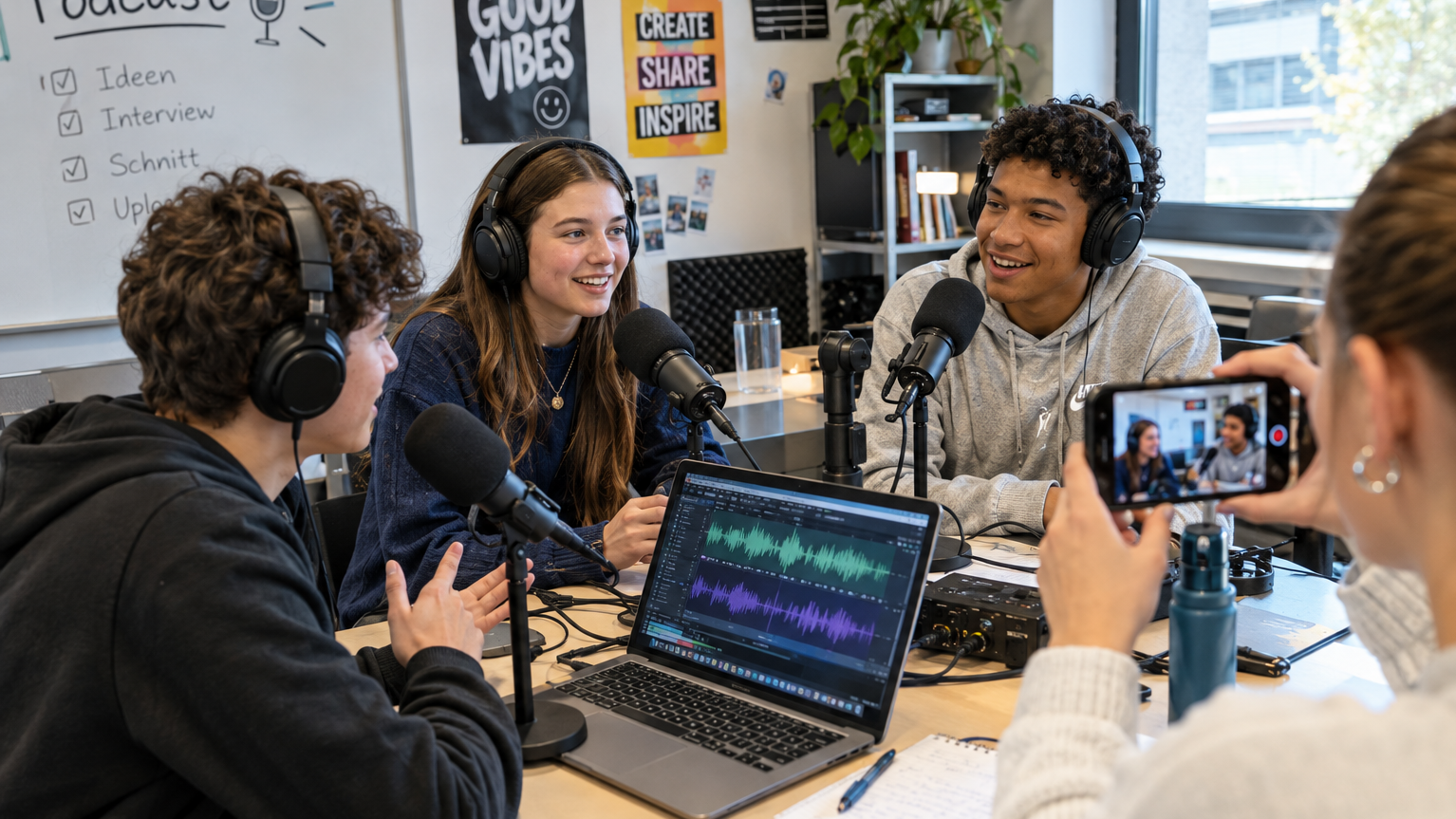
Linking learning and application: In accompanying workshops, young people create their own media content, such as podcasts, video reports, or small games. In this way, they learn not only to understand media but also to shape it consciously and responsibly.
Integrated learning process: Understanding, application, and reflection are intertwined. Young people become competent consumers and creators of media.
Development in Collaboration with Practitioners
MediaQuest emerges from real-world practice. Prototypes are developed in collaboration with teachers and tested in the classroom. Teachers independently implement the modules in their lessons and act as co-creators in the further development of modules and content. Partners from the fields of education, media, and specialized agencies provide advisory support for the project. The tool is designed to be dynamic and adaptable so that it is easily usable by different target groups, particularly vulnerable groups. It can be integrated into various educational settings and is aligned with the competency goals of Curriculum 21.
Scientific Support
The development is scientifically supported using a design-based research approach. Development, testing, and evaluation are iteratively linked. Effectiveness is continuously assessed and optimized using qualitative methods (pre- and post-surveys, focus groups, think-aloud methods, observations, and structured interviews) and quantitative usage data (e.g., duration of use, completed quests, quizzes, and challenges).
Results
The project will run from November 2026 to October 2028. Results are therefore not yet available and will be added on an ongoing basis.
Planned Outcomes
- A modular learning platform adaptable across regions, featuring modules on AI-generated content, disinformation, cyberbullying, and platform logic
- Practical teaching materials, workshop concepts, instructional guides, and application examples for educators
- Reports, examples of best practices, and scholarly articles on promoting media literacy and gamification
- Scientific evaluation results on the tool’s effectiveness, usage patterns, and recommendations for media education
All materials, findings, and results will be made freely and publicly available upon project completion so that other stakeholders can use, adapt, and further develop them.


Practice Partner
- Christoph Blank (https://media-literacy.ch/)
- Céline Meier, Career Guidance School (BWS) Horgen
Academic Support
- PH Zurich (Bernadette Spieler, Dominik Roost)
The project aims to disseminate findings in a targeted manner. Materials will be made available to teachers and schools through the project website, workshops, and partner networks. Presentations and expert articles will be developed for specialized agencies and educational institutions. Scientific findings will be shared through academic publications, conferences, and informational events. Experiences and key findings will be communicated in a manner tailored to specific target audiences via social media and other media outlets.