



Degree programme at a glance
Open up new business areas – with today's tools
Companies that want to grow need new business: new products, new markets, new business models. In the Master of Science in Business Administration with Specialisation in New Business, you learn how to identify, test and build such business areas – in an SME, in a large corporation or in your own start-up.
The programme is designed for today's business environment. You build a solid foundation in innovation, internationalisation and transformation. On that basis, you learn where AI supports companies today and where it creates value.
Please note: the programme is taught mainly in German; some elective modules are taught in English. If German is not your first language, you need German skills at level C1.
Study New Business – in a way that fits your life:
- Full-time: in 3 semesters
- Part-time: in 4 semesters, with a recommended workload of up to 60 %
- Self-study and classes: around 70 % self-study that you organise flexibly, and 30 % interactive classes on site on Thursdays and Fridays, 9.15 am to 4.45 pm in Chur; some elective modules take place on Saturdays
- Tuition fee: CHF 960 per semester for Swiss and Liechtenstein citizens, CHF 1,550 for all other students
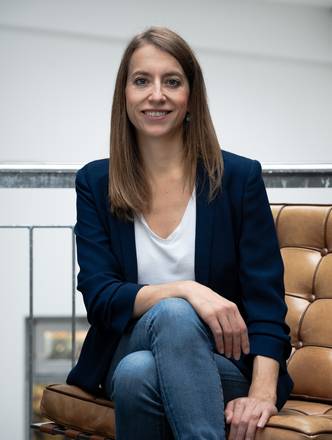
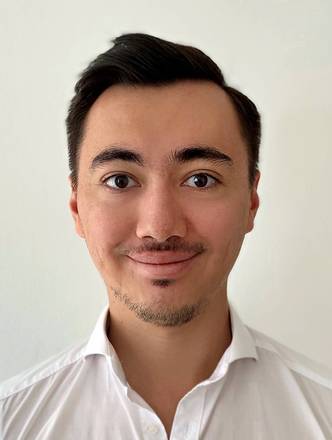
Questions? Write to us or arrange a personal consultation with Dorina Bührle, Director of Studies, or Julia Wellauer, Research associate.
Degree
Master of Science FHGR in Business Administration with Specialisation in New BusinessStudy model
Full-time or part-timeDuration of study programme
3 semesters up to a maximum of 8 semestersPlace of study
Chur (blended learning)Begin of study programme
SeptemberTeaching language
German and partly English (German level C1 required)Director of Studies
Bührle Dorina More about Bührle DorinaApplication deadline
31 May Apply now!
Taster day in the Master's programme New Business
Join a class on a Thursday or Friday. Experience how we work in the programme and talk to students and the Director of Studies. Register and we will arrange the date with you directly.
5 reasons to choose the Master's in New Business





AI in the programme
AI is changing how companies open up new business areas. That is why it is an integral part of the modules in the Master's in New Business, as a topic and as a tool. AI complements your own learning; it does not replace it. You first build the subject knowledge. On that basis, you learn where companies use AI today, how it can support you in your work and where its limits lie.
How you’ll work with AI in your studies
- In Leading Change, you critically review AI-generated analyses of case studies and compare them with your own assessment.
- In the methods courses and in your Master's thesis, you learn to use AI transparently in the research process and to reflect critically on its use.
Research that feeds into teaching
A whole institute stands behind this. The Swiss Institute for Entrepreneurship (SIFE) conducts research in the field of «Digital strategies and AI for companies» and helps companies use AI effectively. Research, teaching and practice come together here.
Learn more about Digital Strategies and AI for Companies
Why a Master's degree?
With a Master’s degree, you take on responsibility for developing a company further. You learn to answer complex questions on a sound scientific basis and to prepare decisions on new business areas. This consecutive Master’s builds on your Bachelor’s degree and is clearly different from an MBA, which is a continuing education programme.
University degrees are gaining importance on the job market: between 1999 and 2019, the share of employees in Switzerland with a university degree almost tripled, from 10 to 29 %.
A master’s degree makes a difference:
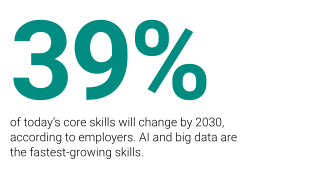
Sources: Die Volkswirtschaft, 2021 (in German) · Swiss Federal Statistical Office, UAS master’s in business, class of 2020 (job, income, in German) · WEF Future of Jobs Report 2025
Career paths
Doors that open to you
With the Master's in New Business, many paths are open to you:
Business development and growth
entering new markets, building partnerships, developing new offerings
Innovation and product management
taking responsibility for products and services from the idea to market launch
Transformation
developing business models and processes further with digital technologies and AI
Entrepreneurship
founding your own start-up or taking over an SME as its successor
Doctorate
thanks to a cooperation agreement (in German) with the University of Zurich, you can pursue a doctorate after your Master's
Our graduates show what this looks like in practice: today, they work in business development, product management, marketing or executive management.

Curriculum
In the Master of Science in Business Administration, you expand your skills in new business development.
The Master of Science in Business Administration comprises three specialisations: New Business, Sustainable Business Development and Tourism and Change, which has an international focus. In shared modules such as research methodology, you learn together with students from the other specialisations and benefit from their perspectives.
New Business specialisation
The New Business specialisation focuses on opening up new business areas. New business areas can be opened up by developing new offerings (Business Innovation), entering new markets (Business Internationalisation) and realising entirely new business models (Business Transformation).
The Business Innovation module teaches how to create an innovation-friendly culture in companies and how innovations come about and are financed.
The Business Internationalisation module deals with the economic, political and legal framework of international competition. It explains which decisions a company has to make in the course of internationalisation and what consequences internationalisation has for intercultural collaboration.
The Business Transformation module deals with technological, ecological and social trends. It shows how new business models arise from trends and how they are implemented in companies.
Elective modules
The elective modules cover current topics in business management.
For example, the Digital Marketing module looks at the impact of digitalisation on marketing. Students learn to use digital strategies to reach customers across different channels – from defining objectives and selecting suitable measures to analysing key KPIs. They also gain an overview of relevant tools and platforms.
The Sustainability Management module examines the role of companies in an increasingly responsible society. It addresses the expectations of different stakeholders and shows how economic, social and environmental goals can be aligned. Students learn how to integrate sustainable action strategically into business processes to create long-term business success and added value for society.
The Supply Chain Management module provides basic knowledge of planning, managing and optimising global supply chains. Students learn how procurement, production and logistics can be designed efficiently and adapted to current requirements such as digitalisation and sustainability. They also acquire skills in process analysis and in applying key metrics and digital tools.
You can choose five of the following elective modules* according to your interests:
- Adaptive Leadership
- Corporate Communication
- Data Management
- Digital Marketing
- Leading Change
- Organisational Development
- Supply Chain Management
- Sustainability Management
*Subject to change
Research methodology
The courses in research methodology teach how to solve practical problems on a sound scientific basis. The Research Design course shows how to prepare and carry out demanding projects. The courses Qualitative Research Methods and Quantitative Research Methods show how to gain new insights with qualitative and quantitative research methods.
Student projects
The student projects serve to apply and deepen what you have learned.
In a practice project, you contribute to the new business development of a company. The client can be your employer or a business partner of the programme.
The highlight of the programme is the Master's thesis. It deepens your knowledge of a topic of your choice. With the Master's thesis, you show that you can answer a practice-relevant question on new business development on a sound scientific basis and derive recommendations for practice.
Get an overview of existing Master's theses (in German).

Would you like to know more about the structure and content of the programme? The study plan, the programme profile and the module overview contain further information.
Practice-oriented teaching
The UAS Grisons places strong emphasis on practical relevance. The learning objectives are based on the requirements of the profession. Students work on practically relevant problems, and the university's business partners are involved in teaching.
Study Trip
You have the opportunity to take part in a study trip and experience how new business areas emerge in practice. You visit companies that have grown by developing new products, opening up new markets and transforming their business model. You experience the challenges of new business development and how these companies master them. You develop an idea for opening up a new business area for a company and present it to its decision-makers.
Blended Learning
The programme is delivered in blended learning mode. Around 70 % of study time is self-study. Learning materials such as literature, learning videos, case studies, games and quizzes are available to you on an e-learning platform.
The remaining 30 % or so are classes on site on Thursdays and Fridays. These classes are deliberately interactive: you deepen, discuss, practise and apply the content. The focus is on exchange among students and with the lecturers.


Strong practical focus
Students work on real-world challenges from industry. Supported by professors in their methodological approach, they present their solutions to the client organisations and receive feedback for their personal development.


Mentoring
In the mentoring programme of the UAS Grisons, students meet experienced specialists and executives as equals. This creates real insights, personal development – and often long-term contacts.
This was also the case for Kristin Kreibich (MSc New Business), who looks back on an enriching year of mentoring with her mentor Martin Gerber (Agile Coach, STORY Thusis). Networking that inspires and opens up new perspectives.


Further reading
- In the Wissensplatz magazine, a student explains what he expects from the Master's programme (in German).
- In a blog post, a Master's student reports on her experience with the Master's thesis (in German).
- Read in a blog post how a Master's student spent a semester abroad in Florence (in German).
Our students' practice partners
Students of the Master's in New Business have carried out practice and consulting projects as well as Master's theses with companies and organisations including the following.









Do you run a company and would like to commission a practice project (in German)? We will be happy to inform you about the options.
Admission
To be admitted to the Master's programme at the UAS Grisons, you must meet the following requirements.
If you have any questions about the admission requirements, please contact us. We will be happy to help.
You hold one of the following degrees:
- a Bachelor's degree from a university of applied sciences recognised in Switzerland
- a Bachelor's degree from a university recognised in Switzerland
Direct admission
Do you hold a Bachelor's degree in business from a university of applied sciences or a university, and can you demonstrate the required language skills? Then you meet the requirements for direct admission to the Master's programme.
Language skills
Is German not your first language? Then you need proof of German skills at level C1.
Bachelor’s degree in a different field
Did you complete a Bachelor's degree in a different field? You can still be admitted, on condition that you acquire the missing prior knowledge before the start of your studies. We are happy to help – contact us!
Transferring from another university
Would you like to transfer to our Master's programme from another university or university of applied sciences? Then please contact the Director of Studies, who also decides whether modules you have already completed can be credited.
Organisation
How much does the programme at the UAS Grisons cost? Where does it take place? How many ECTS credits do I receive? On how many days do I have classes? Which degree do I hold after graduating?
A personal university
The UAS Grisons sees itself as a personal university that actively involves students in the learning process. Classes are held in groups of around 20 students. Lecturers see themselves as coaches who accompany students in their learning.
Students have access to a mentoring programme (in German). It gives them the opportunity to be accompanied by an executive from practice during their studies and to receive support with their career orientation.
Services for students
The UAS Grisons helps students make their time at university as easy and pleasant as possible. We offer various services such as two canteens and libraries, a sports programme, counselling services, a career centre, language courses, various student associations, a choir and much more.
Find out more about our services for students, life in Chur, nature and leisure, and use our housing exchange.
Costs
The one-time enrolment fee is CHF 300 and is credited towards the tuition fee for the first semester. If you do not start your studies, the fee remains payable and will not be refunded.
The tuition fee is:
- CHF 960 per semester for students with Swiss or Liechtenstein citizenship
- CHF 1,550 per semester for all other students
Foreign students who lived in Switzerland for at least two years before starting their studies, are financially independent and were not in education can apply for the reduced tuition fee of CHF 960. The UAS Grisons must review and approve this in advance.
For students from countries outside Switzerland, Liechtenstein, the EU and EFTA, the UAS Grisons requires a deposit of CHF 3,000.
The tuition fees do not include teaching materials, special software, travel, meals and accommodation for excursions, block weeks and the Master's thesis.
You need your own good laptop. The Director of Studies will give you recommendations.
Find out more about financing options, such as scholarships or grants.
Duration and classes
The programme takes three semesters full-time or four semesters part-time and can be combined with professional work. An academic year consists of two semesters of 13 weeks each, followed by two to three examination weeks. Exact dates and details can be found in the academic calendar (in German).
Classes take place as block days on Thursdays and Fridays from 9.15 am to 4.45 pm on the UAS Grisons campus and in-house at the programme's business partners. The locations are easily accessible by public transport. Public parking is available close to the campus in Chur.
Some elective modules take place on Saturdays.
There is no formal attendance requirement at the UAS Grisons. However, classes are designed for active exchange, so your participation is an important part of the programme.
Semester abroad
A semester abroad is an enriching experience. It gives you the opportunity to immerse yourself in another culture during your studies. This experience improves your language skills as well as your intercultural and social skills.
A semester abroad broadens your horizons and helps you develop your personality. Previous exchange students therefore highly recommend it.
Below you will find an overview of the partner universities of the New Business specialisation where you can complete a semester abroad.

Working alongside your studies
The Master's programme can be combined with professional work. A workload of up to 60 % is recommended, depending on the chosen duration of study.
Regulations and ECTS
The Regulations for Bachelor's and Master's programmes and the associated directive and guideline govern the conduct of studies, examinations and progression.
The European Credit Transfer and Accumulation System (ECTS) creates a standardised education area in Europe. Within it, students can move freely and have their academic achievements recognised throughout Europe.
Students receive ECTS credits for their learning outcomes, calculated from the workload and other conditions of the individual modules. One ECTS credit corresponds to an average workload of around 30 hours. Besides attending classes, the student workload includes time spent preparing and reviewing course content, preparing for examinations and self-study. At the UAS Grisons, a Bachelor's programme comprises 180 ECTS credits and a consecutive Master's programme 90 ECTS credits.
Support during your studies
We want you to succeed in your studies at the UAS Grisons. If you have military obligations or health-related, structural or cultural difficulties, we will support you in organising your studies.
Compensation for disadvantages: If you have a disability or chronic illness that makes learning more difficult, you can apply for compensation for disadvantages. More information is available on the website of the contact point for compensation for disadvantages.
Postponement of military service: Find out how to postpone your military service with a request for postponement (in German).
Top-level athletes: The UAS Grisons wants top-level athletes to be able to combine their studies and sport. More information is available on the university sports website.
Application and advice
Application
If you would like to apply for the programme, fill in the online application form and upload the required documents.
Application deadline: The application deadline is 31 May of the year in which you start your studies. Places are allocated in the order in which complete applications are received. Applications received after the deadline will still be considered if places are available. The administration office will be happy to provide information.
Advice
Do you have questions about the content or administration? Would you like personal study advice? We will be happy to help.
University of Applied Sciences of the Grisons
Comercialstrasse 22/24
7000 Chur
Switzerland
Phone +41 81 286 24 59
Email master@fhgr.ch
Director of Studies
Research Associate

Organisational Assistant

Information events
Visit our information events on the Master's in New Business – new dates are added regularly. Please note that the events are held in German. We look forward to meeting you!
FAQ
Here you will find answers to frequently asked questions about the Master's in Business Administration with Specialisation in New Business and the profession of business development manager.
What is New Business?
New Business is about opening up new business areas to make companies fit for the future. This happens through developing new products, entering new markets and transforming business models. The focus is therefore on innovation, internationalisation and transformation.
What role does AI play in the programme?
AI is an integral part of the modules, as a topic and as a tool. You first build the subject knowledge. On that basis, you learn where companies use AI today, where it creates value and where its limits lie. AI complements your own learning; it does not replace it.
Can I study alongside my job?
Yes. Around 70 % of the programme is self-study that you organise flexibly. Classes on site on Thursdays and Fridays thrive on exchange, so plan to keep these two days free. Part-time, you complete the programme in four semesters. A workload of up to 60 % is recommended. You can also carry out your practice project for your employer.
What does a Master's offer compared with a Bachelor's?
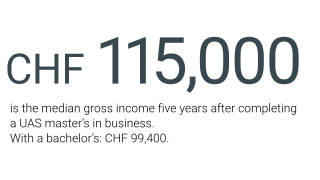
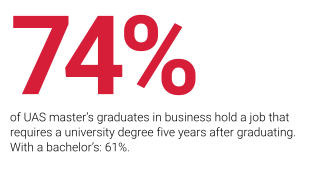
With a Master's degree, you deepen your skills and qualify for demanding tasks in developing companies further. This also shows on the job market: according to the Swiss Federal Statistical Office, five years after graduating, master's graduates from universities of applied sciences in business and services more often work in positions that require a university degree (74 % compared with 61 % with a bachelor's degree). Their median gross income is also higher (CHF 115,000 compared with CHF 99,400, class of 2020).
What is a Master of Science in Business Administration?
The Master of Science in Business Administration qualifies you for demanding specialist and management roles in companies. Students deepen their business skills and learn to analyse complex economic problems. The degree opens up a wide range of career opportunities in business and consulting. As a consecutive programme, it builds on a Bachelor's degree and is therefore clearly different from an MBA, which is a continuing education programme. At the UAS Grisons, you can complete it in three specialisations: New Business, Sustainable Business Development and Tourism and Change.
Is a Master's with Specialisation in New Business worth it?
A Master of Science in Business Administration with Specialisation in New Business offers attractive career prospects, because specialists and managers who open up new business areas with innovative strength are in high demand. At the UAS Grisons, students also benefit from a flexible study model with strong practical relevance, close links to business and targeted support for entrepreneurial thinking.
What can I do with a Master's in New Business?
With a Master of Science in Business Administration with Specialisation in New Business, you actively shape the future of companies in different industries, nationally and internationally. Typical career fields are business development, product management and innovation management. You develop new business models, open up markets or lead projects for digital or organisational transformation.
What are the admission requirements?
For the Master of Science in Business Administration with Specialisation in New Business at the UAS Grisons, you need a Bachelor's degree in business from a university of applied sciences or a university. You can also be admitted with a degree in another field, provided you acquire the missing prior knowledge before the start of your studies. The programme is taught mainly in German; if German is not your first language, you need German skills at level C1. If you want to transfer from another university or have questions about admission, please contact the Director of Studies.
How demanding is the programme?
The Master of Science in Business Administration with Specialisation in New Business requires strategic thinking, innovative strength and initiative. Thanks to the flexible study model of the UAS Grisons, the strong focus on real business situations and modern teaching methods, it is very manageable – especially for students who are enthusiastic about entrepreneurial questions and willing to contribute their own ideas.
What does a business development manager do?
Business development managers identify new business opportunities and drive a company's growth. This includes entering new markets, building strategic partnerships, developing new products or services, and analysing markets. The aim is to create long-term revenue potential and to develop the company strategically.
Typical tasks are:
- conducting market and competitor analyses
- developing and implementing business development strategies
- identifying and opening up new markets, customers and partnerships
- developing or redesigning business models and offerings
- coordinating internal collaboration with sales, marketing and product management
Are business development managers in demand?
Business development managers are in high demand. Companies in all industries are looking for specialists and managers who can open up new markets, recognise growth potential and develop innovative business models. Especially in times of digital change and global competition, strategically minded business developers are crucial to a company's long-term success.
How much does a business development manager earn?
Salaries for business development managers vary depending on industry, position, experience and bonus share, but they are attractive across the board.
- After a Master’s in business and services from a university of applied sciences: median gross income is around CHF 99,000 one year after graduating and around CHF 115,000 five years after graduating (Swiss Federal Statistical Office, classes of 2024 and 2020, in German).
- As a business development manager: the average salary in Switzerland is around CHF 121,000 per year including bonus, with a typical range of CHF 100,000 to 160,000 (Glassdoor, retrieved October 2026).
How do I become a business development manager?
To become a business development manager, a Master's degree in business administration, economics or management is recommended. The UAS Grisons offers the practice-oriented Master of Science in Business Administration with Specialisation in New Business. Classes take place in blended learning mode, and the programme takes 3 semesters full-time or 4 semesters part-time.