



Overview
Personal integrity and respect affect us all - in our studies, in our day-to-day work and in our interactions at the UAS Grisons. Respectful and diverse cooperation is only possible if we take our own integrity seriously and respect that of others. At the same time, we have noticed that there are many questions when it comes to issues such as sexual harassment, sexism, bullying and discrimination.
This is precisely where this campaign comes in.
We want to inform, raise awareness and make people think. Not in a lecturing way, not with a raised index finger - but openly, clearly and honestly. It's about making knowledge accessible, enabling conversations and reducing fear of contact.
The starting point was a simple but important question:
How do we bring the topic of diversity and personal integrity closer to the entire university community - and how can we live zero tolerance together at the UAS Grisons?
Our answer:
And we have launched this campaign accordingly.
The campaign stands for awareness instead of shame, for plain language instead of empty phrases and for an active debate instead of looking away. It aims to encourage people to take a closer look, ask questions, reflect on their own attitudes - and take responsibility. Because a respectful university culture is created when we deal with these issues, talk about them and take them seriously - together.



Benefit and goal
The aim of the campaign is to establish a zero-tolerance culture towards transgressive behavior. This means that sexism, discrimination and bullying in any form have no place - and are not trivialized or ignored. At the same time, the aim is to raise awareness of personal responsibility. For example, for our own dealings with others, for mutual respect and for mindful, fair treatment in everyday study and work life.
The values of the UAS Grisons - such as equal opportunities, equality and respect - can only be truly lived if everyone joins in. Personal integrity is not an individual task, but a shared responsibility of the entire university community: students, employees and the entire FHGR community.
Only together can we create an environment in which everyone feels safe, respected and taken seriously. Because: ‘Discrimination starts in everyday life - in words and actions that we sometimes only say/do in passing.’
Campaign team
The campaign was co-created by internal university specialists and student experts. The students co-developed and implemented it as part of ‘Diggezz’ - and thus also gave it a 'designer' and creative face.
- Corin Harzenmoser, Head of the Diversity Office and Project Manager/Campaign Manager
- Susanna Roffler, Head of Counseling Center/NTA Contact Point
- Flurina Simeon, Head of University Communication
- Seraina Zinsli, Project Manager University Communication
- Jesica Castro, Project Manager Marketing
- Sarina Daros, MMP Students
- Alessio Rosano, MMP student
- Andri Kummer, MMP student
- Livio Fretz, MMP student
- Laila Keller, MMP student
If you have any input, suggestions and/or questions about the campaign, please contact Corin Harzenmoser.
Campaign look and feel
The visual appearance of the campaign is deliberately designed to be clear, loud and visible.
Colors
The bright colors are based on the LGBTQIA+ flag. They stand for diversity, openness and difference. At the same time, they ensure that the campaign catches the eye. The colors make it clear that diversity is part of who we are as a university and should be visible.
Logo
The campaign logo is deliberately based on the FHGR logo - but at an angle. It breaks with the familiar, plays with form and perspective and thus makes diversity visible. Clear, but at the same time appealing - just like the attitude that the campaign stands for.
Statements
Many of the following statements are said quickly in everyday life - often without malicious intent. Nevertheless, they can hurt, exclude or overstep boundaries. Not everything that sounds ‘normal’ is harmless. Language shapes how we think and how we treat each other. It can empower - or hurt and discriminate. Sensitization does not mean expecting to be perfect. It means looking, listening and learning.
'This is so retarded.'
Is actually not a critique, but discriminatory.
This statement is often used to evaluate something with a negative connotation or to express frustration. However, it uses a term that devalues people with disabilities. Even if it is not meant that way, such words hurt and reinforce discriminatory thinking.


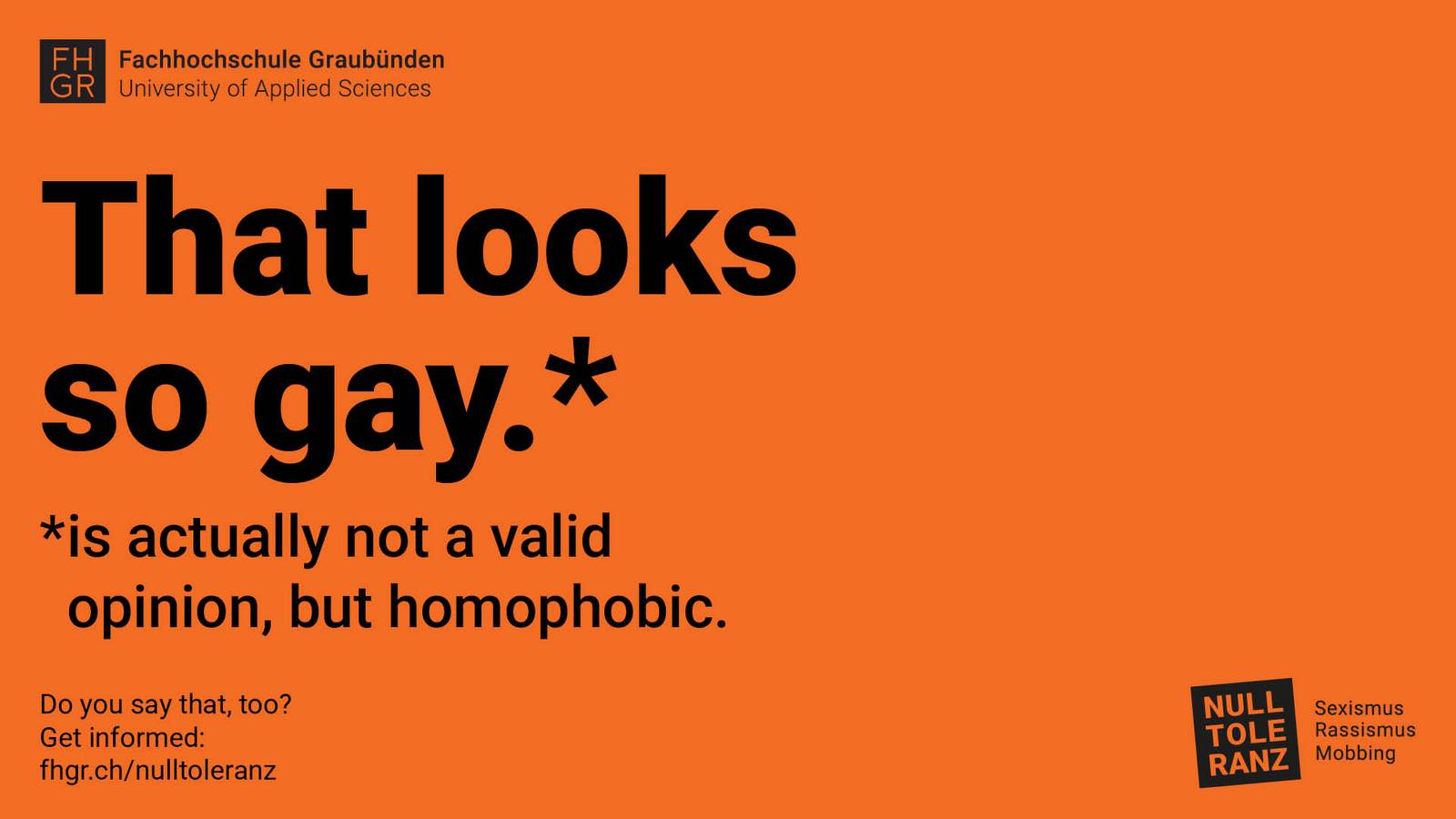
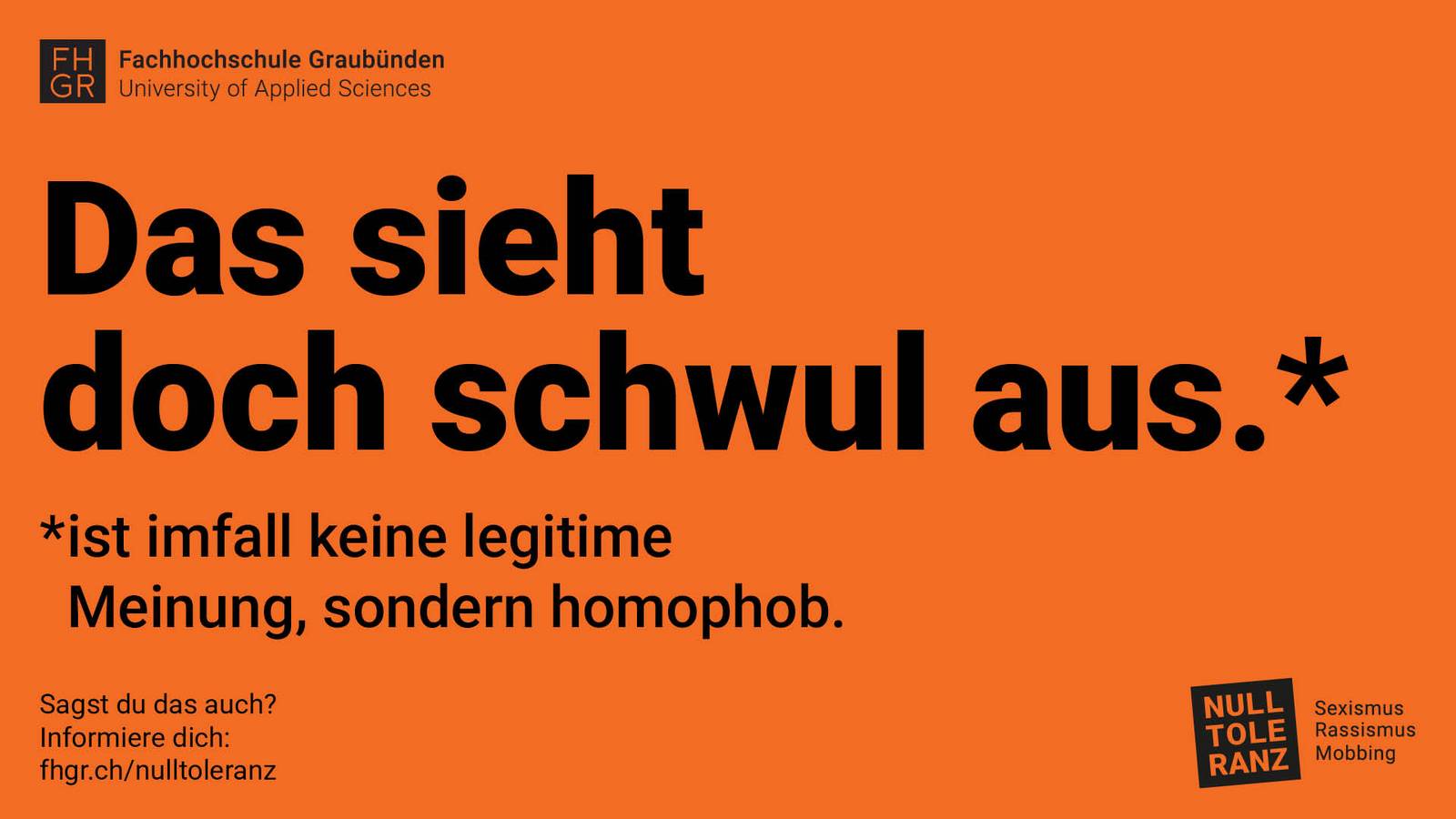
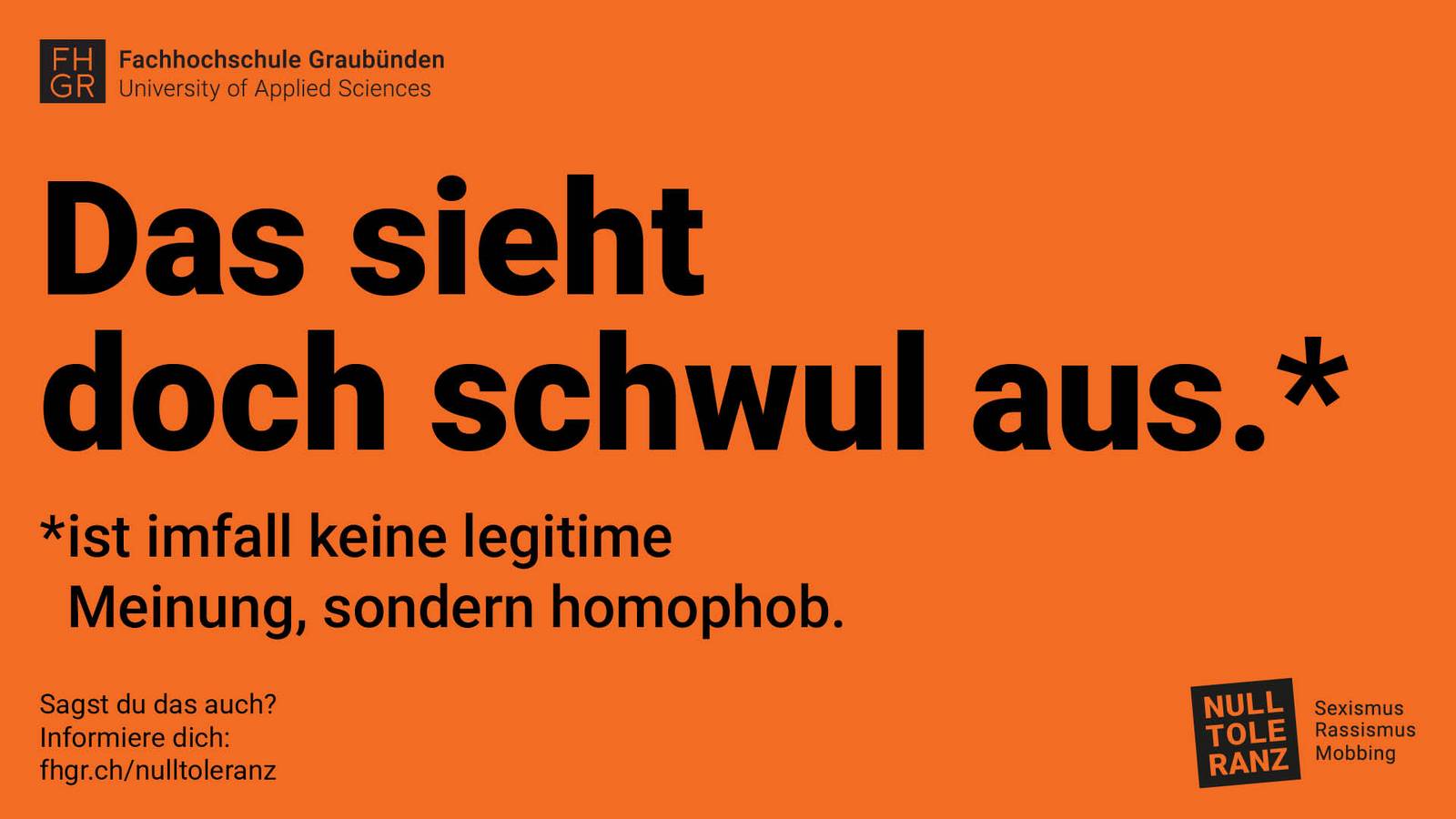
'That looks so gay.'
Is actually not a valid opinion, but homophobic.
The word ‘gay’ is used here to make something bad or ridiculous. It links sexual orientation with something negative. This is not a personal opinion about style or taste, but a derogatory statement towards queer people - even if it is said thoughtlessly or without malicious intent.
'Typical woman.'
Is actually not a neutral statement, but sexist.
Such sentences pigeonhole women. They reduce individual behavior to gender stereotypes and devalue women. This is not neutral, but sexist.


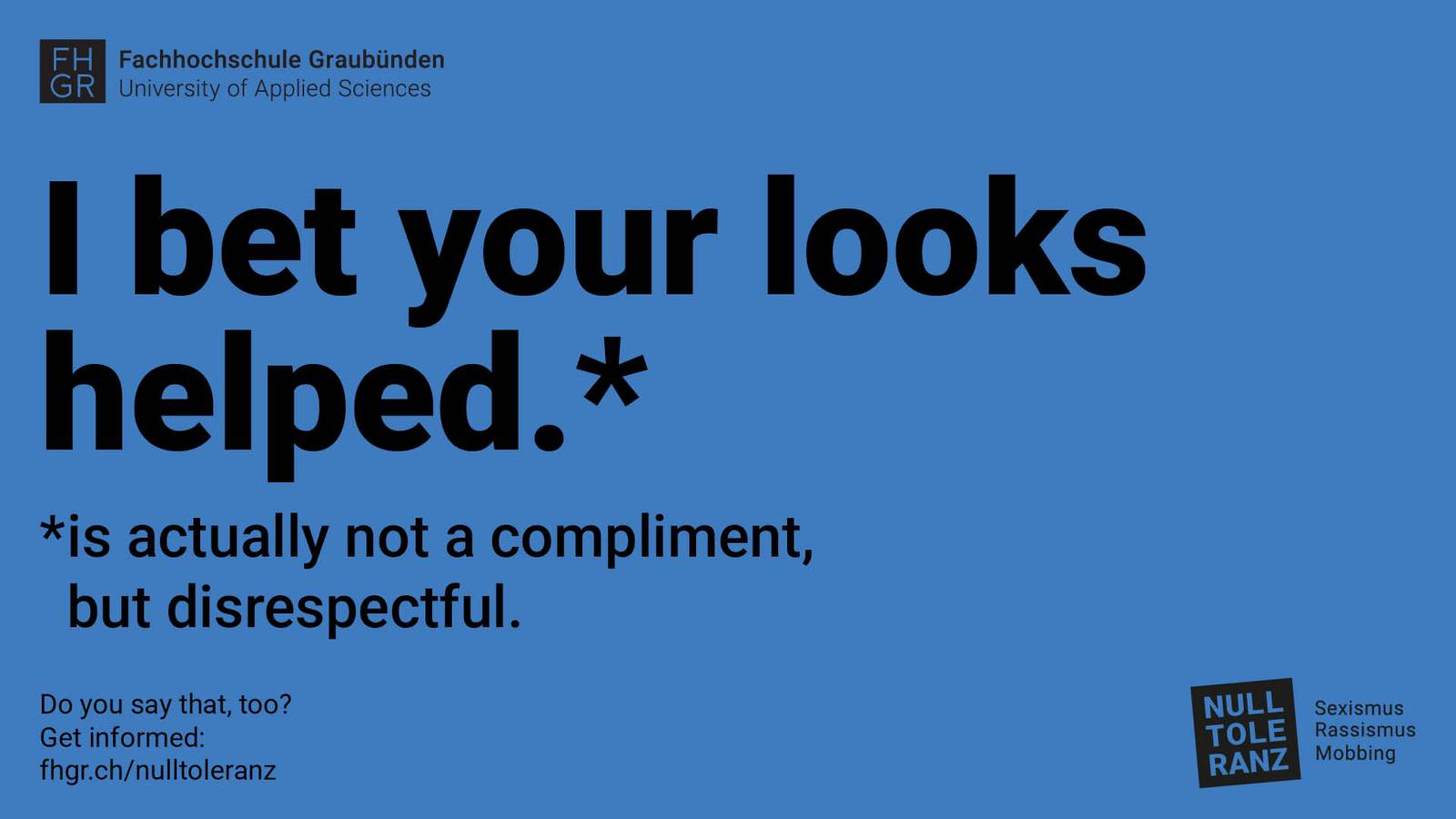
'I bet your looks helped.'
Is actually not a compliment, but disrespectful.
At first glance, this sounds like a compliment. However, it actually questions a person's performance and suggests that success has more to do with looks than ability. This is disrespectful and unfair.


'She must be on her period.'
Is actually not a harmless observation, but sexist.
This statement is often used to devalue reactions or feelings. It draws on the female cycle to portray emotions as "illogical" or "exaggerated". This is disrespectful - and sexist, even if it is "just said".


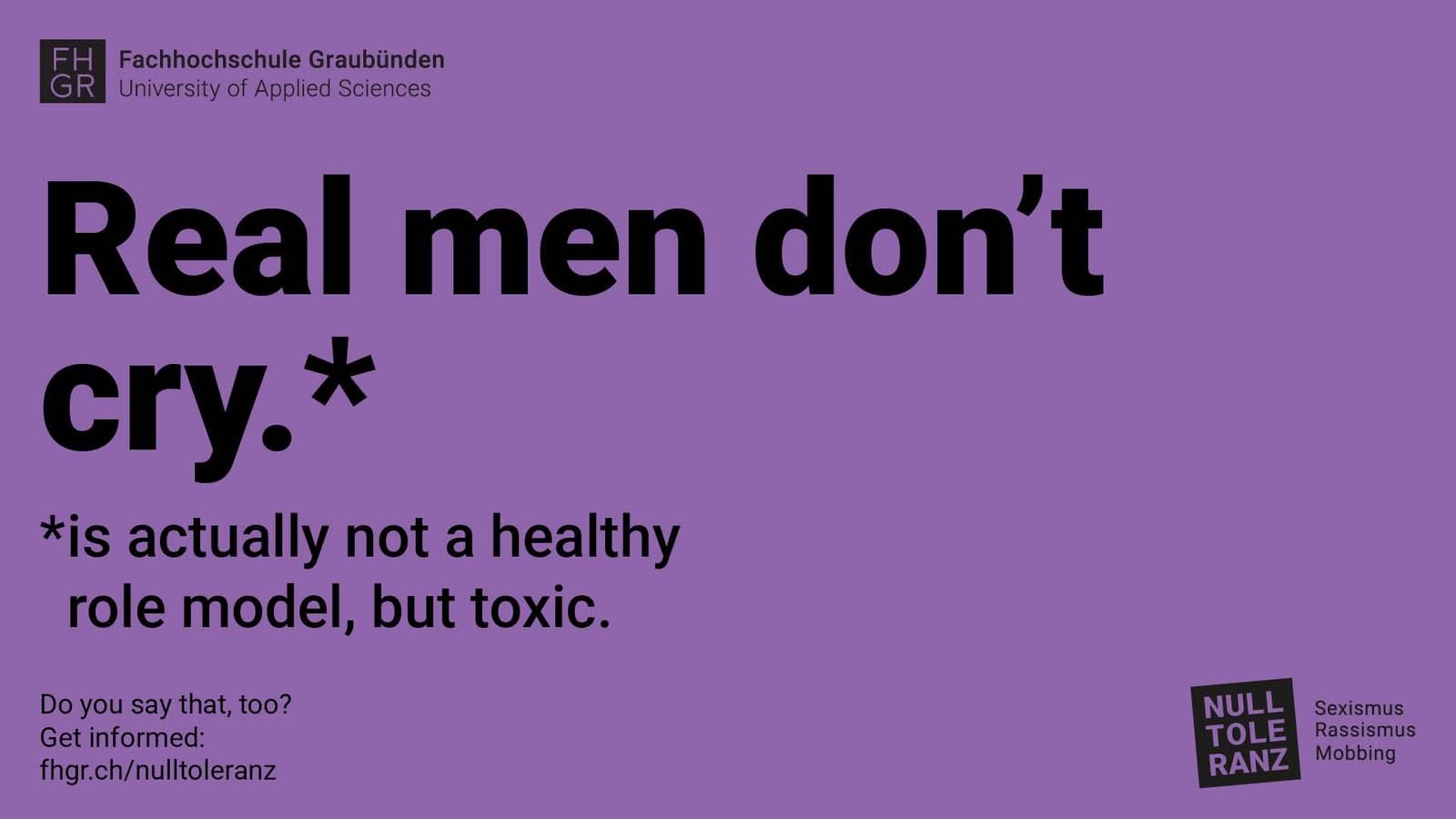
'Real men don’t cry.'
Is actually not a healthy role model, but toxic.
This sentence conveys a role model that suppresses feelings. It puts men under pressure and prevents them from showing their emotions openly. That's not healthy - for anyone.


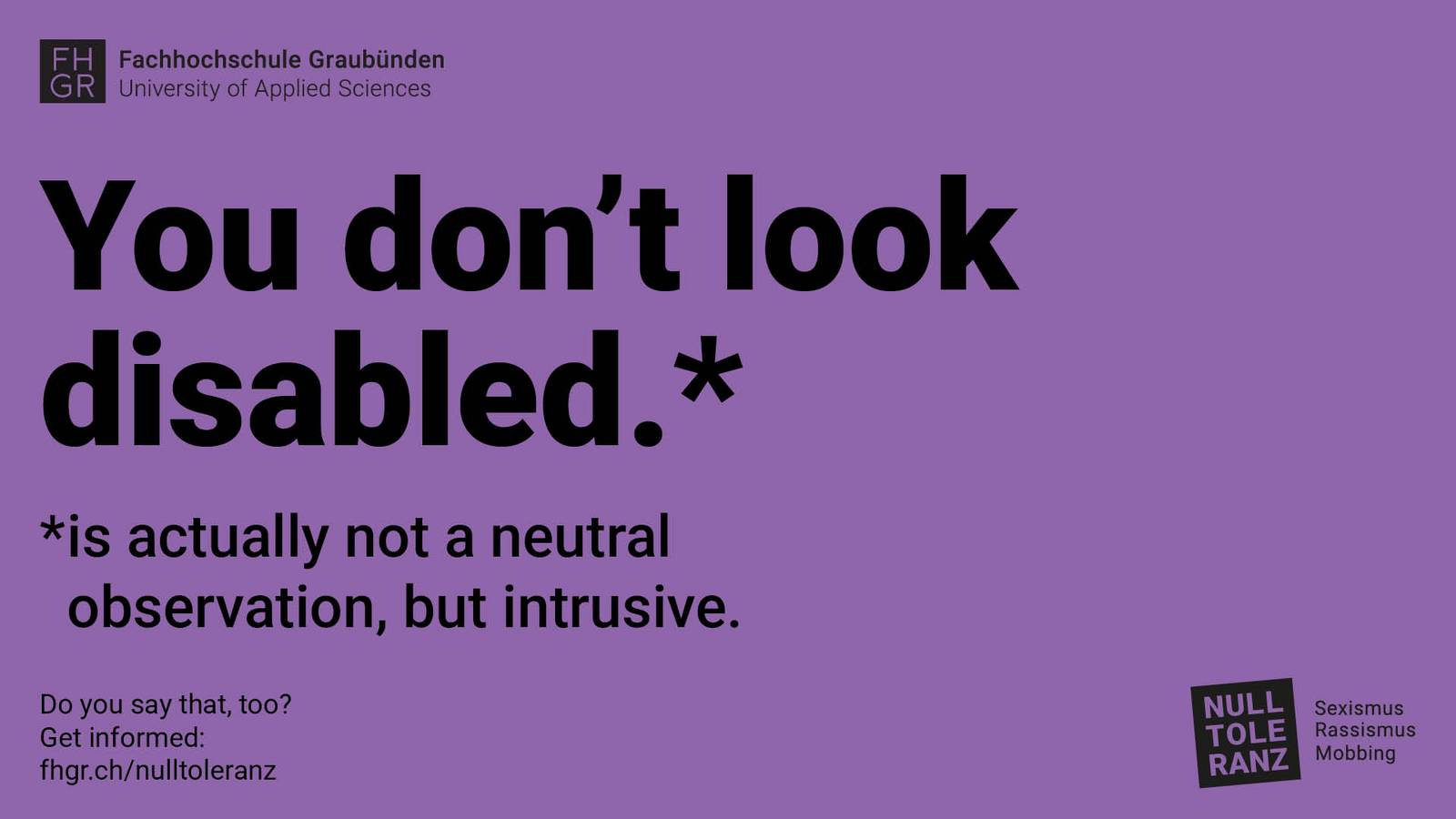
'You don’t look disabled.'
Is actually not a neutral observation, but intrusive.
Not all disabilities are visible. This statement questions a person’s disability and forces them to justify themselves. Even if well-intentioned, this crosses the line and is not okay.


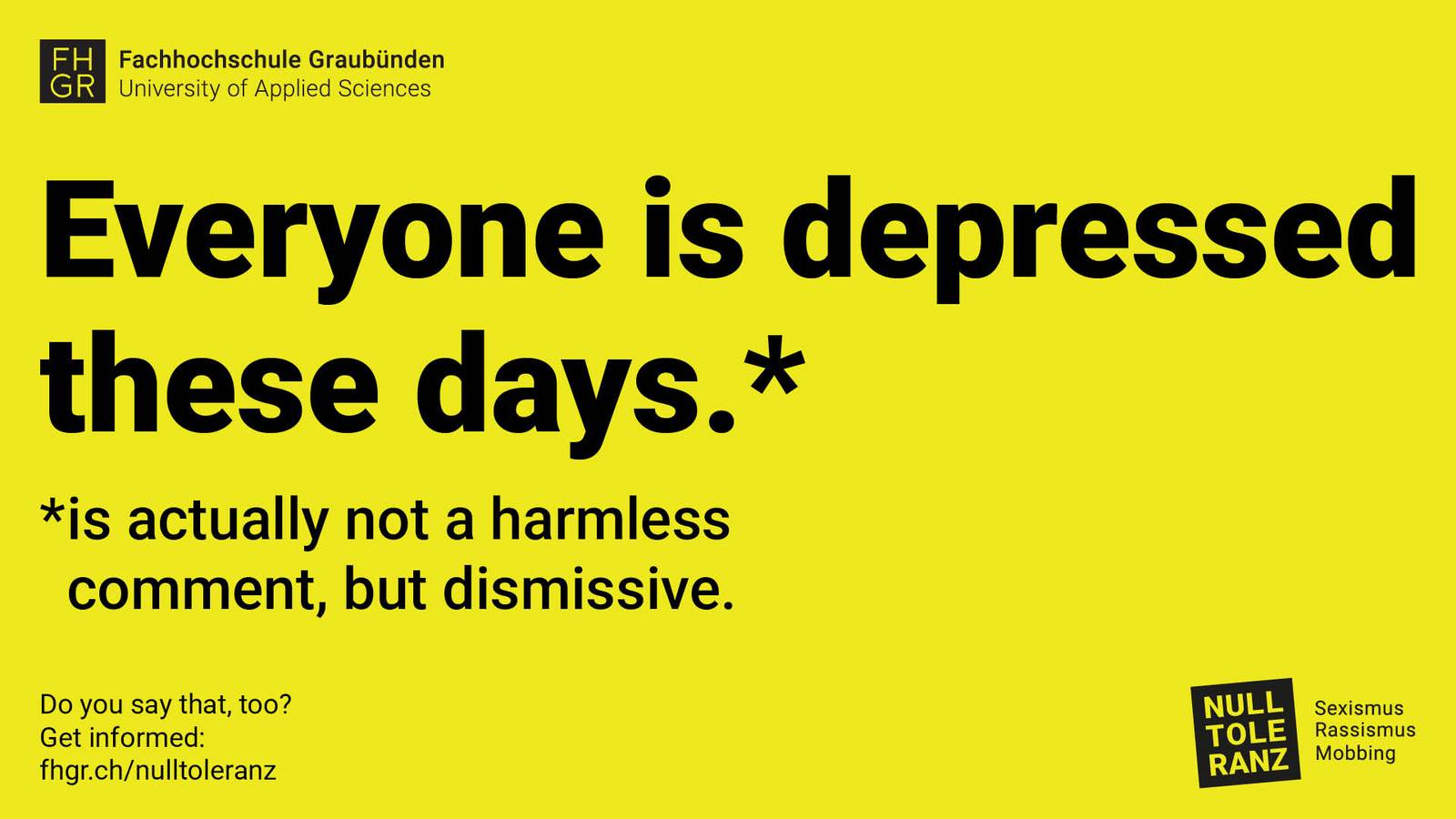
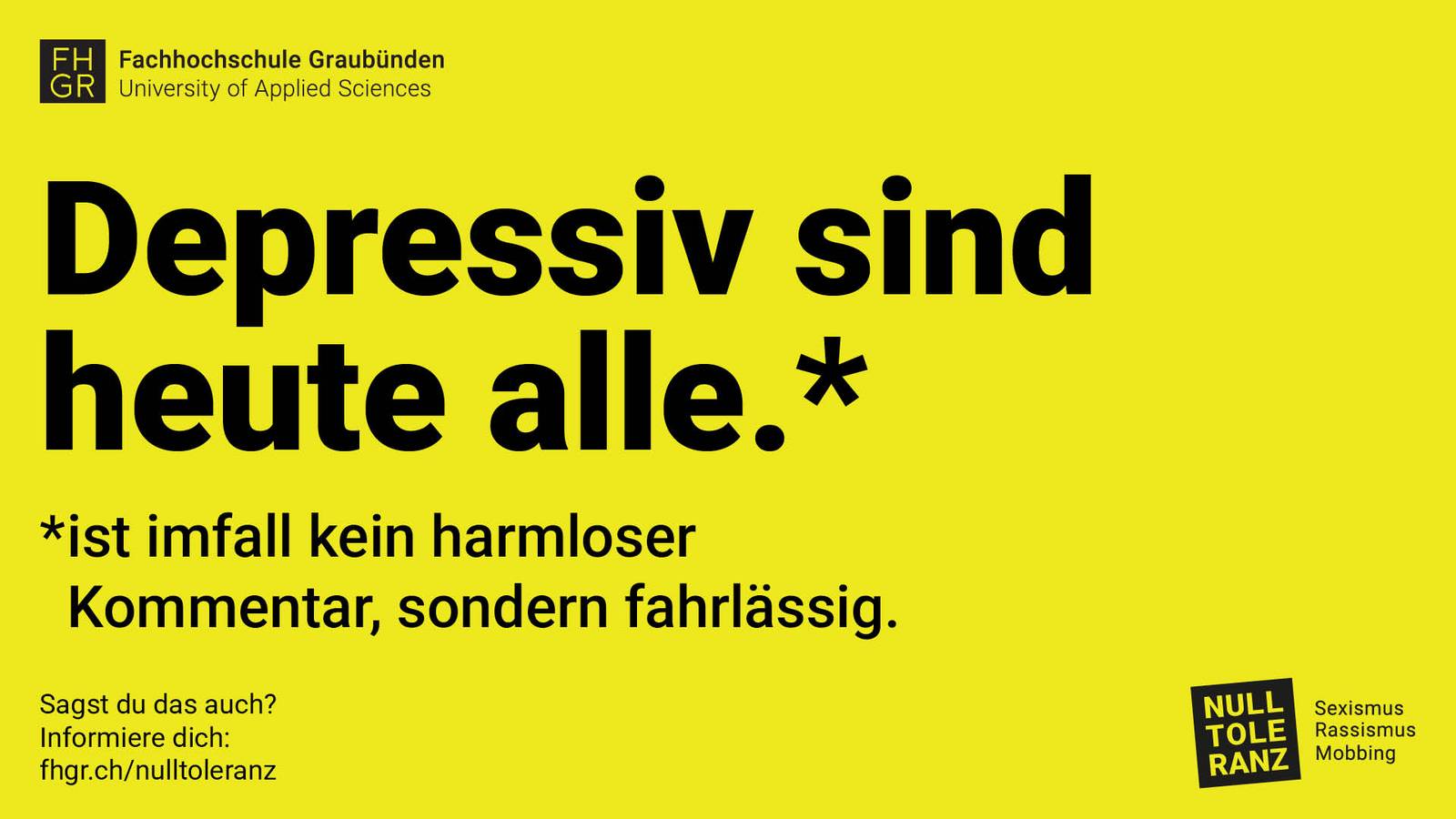
'Everyone is depressed these days.'
Is actually not a harmless comment, but dismissive.
Such statements trivialize mental illness. They do not take the problems of those affected seriously and can lead to help not being sought. This is negligent - and can be dangerous.

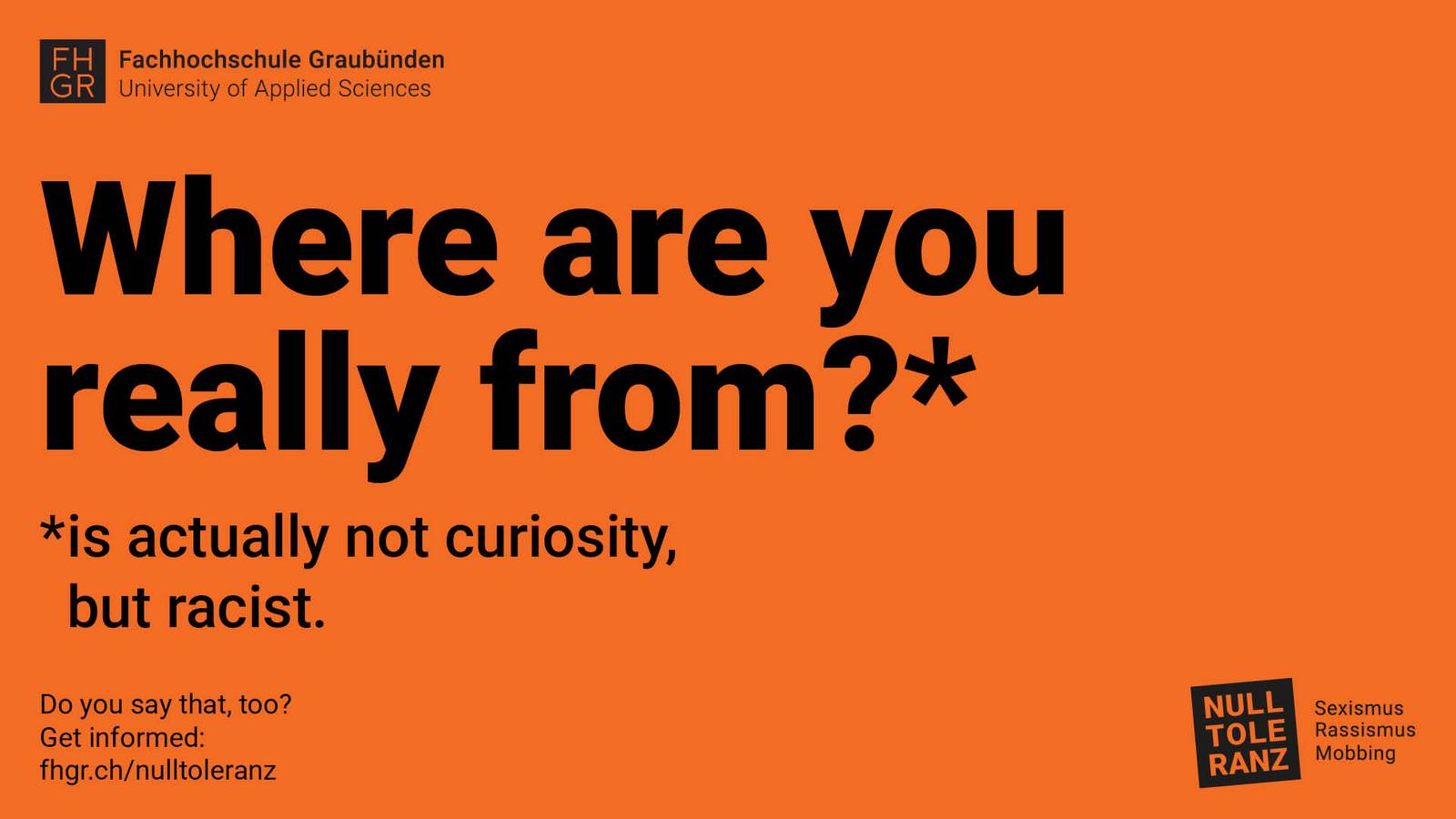
'Where are you really from?'
Is actually not curiosity, but racist.
The question sounds curious, but often conveys that you don't really belong. It reduces people to their origin and turns them into "others". This is racist, even without malicious intent. The context is crucial: who is asking, in what relationship and from what position. The question becomes particularly problematic when an answer such as "I come from Chur" is not accepted and a "real" origin is asked. In an equal, voluntary exchange about origin, the question can have a different effect. In many everyday situations, however, it marks people as "other" - and that is precisely what makes the question racist.


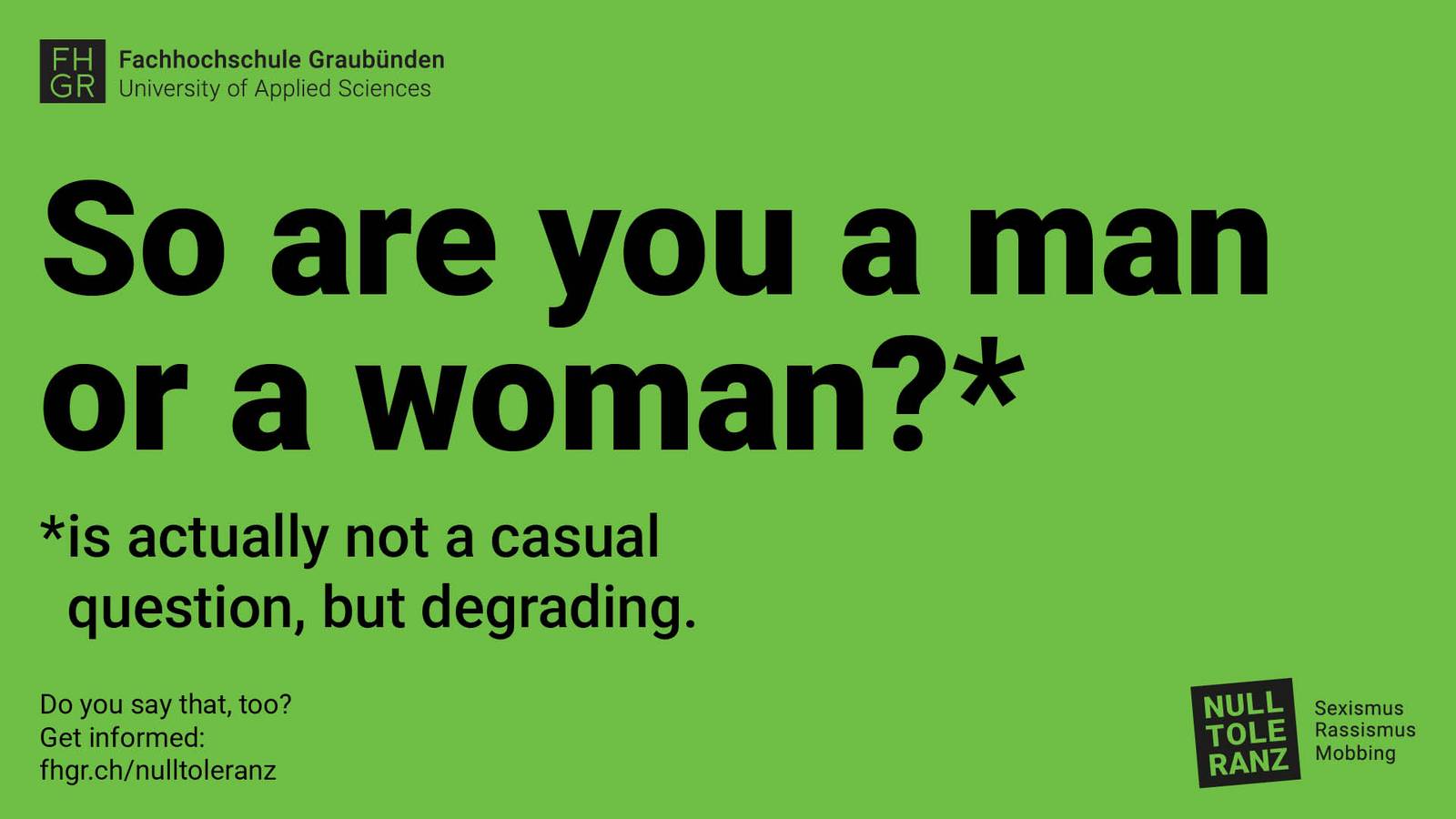
'So are you a woman or a man?'
Is actually not a casual question, but degrading.
This question has a deep impact on personal identity. It reduces people to categories and violates the dignity of trans and non-binary people in particular. This is degrading - even if it happens out of ignorance.


'Is dialect okay?'
Is not considerate, but linguistically exclusionary.
The question sounds considerate, but can convey that certain languages are not actually intended here. It sets dialect as the tacit norm and marks High German as a deviation. In group settings - for example at events or in the classroom - it potentially puts individuals in uncomfortable justification situations. Instead of creating connection, the question signals pressure to conform.
Personal integrity
Personal integrity means respecting the dignity, boundaries and self-determination of every person. It concerns our bodies, our feelings, our identity, our opinions and our personal boundaries - at university, at work and in social interaction.
Personal integrity is violated when people feel insecure, belittled, excluded or put under pressure because of their gender, origin, sexual orientation, religion, disability, age, position or other personal characteristics. This does not always happen through purely obvious boundary violations. Repeated comments, derogatory remarks, subtle behavior or existing power imbalances can also make people feel uncomfortable, not taken seriously or restricted.
A university is a place for learning, working and living together. In order for everyone to feel comfortable and safe here, it is crucial that personal integrity is protected, respected and taken seriously. This includes being aware of one's own boundaries, respecting the boundaries of others and being alert to situations in which these are overstepped. This is a shared responsibility.
The Diversity Policy explains the attitude of the UAS Grisons.
The three main forms of boundary violations that affect personal integrity are explained below.
What is sexual harassment?
Sexual harassment includes unwanted sexual or sexist comments, gestures, messages or touching. The decisive factor is not the intention, but the effect. If a person feels uncomfortable, pressured or belittled, a boundary has been crossed.
The internal ‘Guideline for cases of sexual harassment, bullying and discrimination at work and during studies’ of the UAS Grisons defines the term and the procedure in the event of sexual harassment:
'Sexual harassment manifests itself in one-sided behavior with a sexual reference that is unwanted by the person concerned or is perceived as threatening. Sexual harassment can be carried out with words, gestures or actions. It manifests itself, for example
- in sexist slogans or jokes, offensive or embarrassing remarks
- in sexist and derogatory gestures
- by displaying, hanging up or putting on sexist material
- unwanted physical contact and intrusive behavior as well as ambiguous invitations
- through advances that are accompanied by promises of advantages or threats of disadvantages.'
What is bullying?
Bullying describes repeated, systematic, hurtful, hostile and/or exclusionary behavior towards a person. This can take the form of words, actions or deliberately ignoring someone. The aim or effect is often to belittle, isolate or put someone under pressure. Bullying is rarely loud and obvious. It is often subtle - but very distressing for those affected. Here too, what counts is not how something was meant, but how it is received.
The UAS Grisons' internal ‘Guidelines for cases of sexual harassment, bullying and discrimination at work and during studies’ define the term and the procedure in the event of bullying:
'Bullying is behavior that is systematic, hostile and persistent over an extended period of time and is intended to harass, ostracize, harass or exclude a person from work or study. Depending on the specific circumstances and the intensity of the behavior in question, acts of bullying may include, for example
- constant unjustified criticism of work/study performance
- Refusal of contact and exclusion
- Ridiculing people
- Spreading rumors
- Withholding information necessary for work
- Assigning pointless and insulting work
- Threats and aggression.'
What is discrimination?
Discrimination means that people are disadvantaged, excluded or devalued on the basis of certain characteristics. This includes, for example, gender, origin, skin color, sexual orientation, religion, disability or mental health. Discrimination can occur overtly or covertly - through language, behavior, structures or a lack of sensitivity. It signals that someone does not belong. And that is precisely what contradicts our university culture.
The UAS Grisons' internal ‘Policy on cases of sexual harassment, bullying and discrimination in the workplace and during studies’ defines the term and the procedure in the event of discrimination:
'Discrimination is the belittling and disadvantaging of employees and students on the basis of their gender, physical or mental impairment, origin, language, skin color, religion, political views, sexual orientation, family situation, marital status, age or other characteristics. Discrimination includes, for example
- verbal or written statements and actions with derogatory content
- direct or indirect discrimination.'
I need help
We will not leave you alone with your concerns.
Diversity Office / Reporting office for cases of discrimination, sexual harassment and bullying
Corin Harzenmoser
Contact point for compensation for disadvantages
Susanna Roffler
Counseling center for students
Susanna Roffler
Malgorzata Suter-Kaminski
Person of trust for employees
Corin Harzenmoser
Counselor for students
Susanna Roffler