Studies at a glance
Civil engineering in the Alpine region - structures, natural hazards, hydraulic engineering, geotechnics and sustainable infrastructure.
Are you interested in civil engineering and want to solve complex challenges in the Alpine region? Then the Master of Science in Engineering (MSE) with a specialization in Civil Engineering at the UAS Grisons is the right course for you.
A degree opens the door to a top professional position or a job in research and development. The Master of Science in Engineering (MSE) is an educational program developed jointly by the Swiss universities of applied sciences. It is aimed at highly motivated Bachelor's graduates with a very good degree. The language of instruction is German and English. Contact teaching accounts for around one third (30 ECTS) of the entire course and is mainly held centrally in Zurich. The remaining two thirds (60 ECTS) are dedicated to practical project work and the Master's thesis and take place locally at the enrolled university of applied sciences.
Degree
Master of Science FHGR in Engineering with specialization in Civil EngineeringStudy model
Full-time or part-time studyDuration of study programme
Full-time: 3-8 semesters (3 semesters) Part-time: 6-8 semesters (5 semesters) (see duration of studies)Place of study
Chur: Specialist specialization + Master's thesis (60 ECTS) Zurich: Theory and context modules (30 ECTS)Begin of study programme
Fall or spring semesterTeaching language
German / EnglishApplication deadline
Fall semester: May 31 / Spring semester: November 30
Future prospects
Graduates of the MSE Civil Engineering actively shape the infrastructure of tomorrow. They plan civil engineering structures and traffic routes, develop sustainable buildings and help to protect settlements and infrastructure from natural hazards. In doing so, they combine scientific methods with practical implementation skills and are able to analyze and solve complex engineering issues holistically.
After completing their studies, graduates work in engineering and planning offices, construction companies, public administrations or specialized companies. They take on responsibility in projects, coordinate interdisciplinary teams and develop innovative solutions in areas such as civil engineering, natural hazards, geotechnics, hydraulic engineering, protective structures or infrastructure development.
With increasing professional experience, a wide range of development opportunities open up - from project management to technical specializations and activities in research and development. The MSE degree also provides a solid foundation for a further academic career.
Training in an alpine context gives graduates a special profile: they are used to working under demanding topographical, geological and climatic conditions and developing solutions for real challenges. These skills are in high demand both nationally and internationally.
Course content
In the Master of Science in Engineering (MSE) with a specialization in Civil Engineering, you will deepen your knowledge of civil engineering and develop the ability to systematically analyze and solve complex problems. The focus is on practical tasks in the Alpine region.
You will deal with topics such as civil engineering structures, natural hazards, geotechnics, hydraulic engineering, hydropower and sustainable infrastructure. You will analyze processes such as rockfall, avalanches and debris flows, investigate subsoil conditions and develop sound solutions for buildings and infrastructure.
In the field of hydraulic engineering and hydropower, you will plan and optimize hydraulic systems, flood protection measures and energy generation plants under challenging conditions.
Another focus is on structural engineering and engineering structures such as bridges, galleries and retaining structures. You will deal with load-bearing behavior, building materials as well as structural and economic aspects and deal with the maintenance and further development of existing infrastructure.
In the field of natural hazards, you will be introduced to natural hazard processes (avalanches, rockfall, torrents, landslides and hillslope debris flows) by Graubünden experts and plan appropriate protection systems against these alpine natural hazards.
You will learn to model technical systems, analyze them numerically and apply scientific methods in a targeted manner. At the same time, you will develop the ability to work in an interdisciplinary manner and develop sustainable solutions.
Graduates are able to understand complex construction and infrastructure systems holistically and implement innovative solutions. They have sound skills in natural hazards, geotechnics, hydraulic engineering, hydropower and civil engineering structures and are optimally prepared for responsible tasks in civil engineering.
Study focus:
- Civil engineering structures (bridges, bridges, galleries, tunnels)
- Natural hazards (avalanches, rockfall, debris flow, landslides, torrents)
- Geotechnics and geosynthetics (special civil engineering)
- Hydraulic engineering and hydropower
- Structural and infrastructure engineering
- Building materials and material behavior
- Maintenance and renovation of buildings
- Sustainable construction in the alpine region
study plan
Study plan
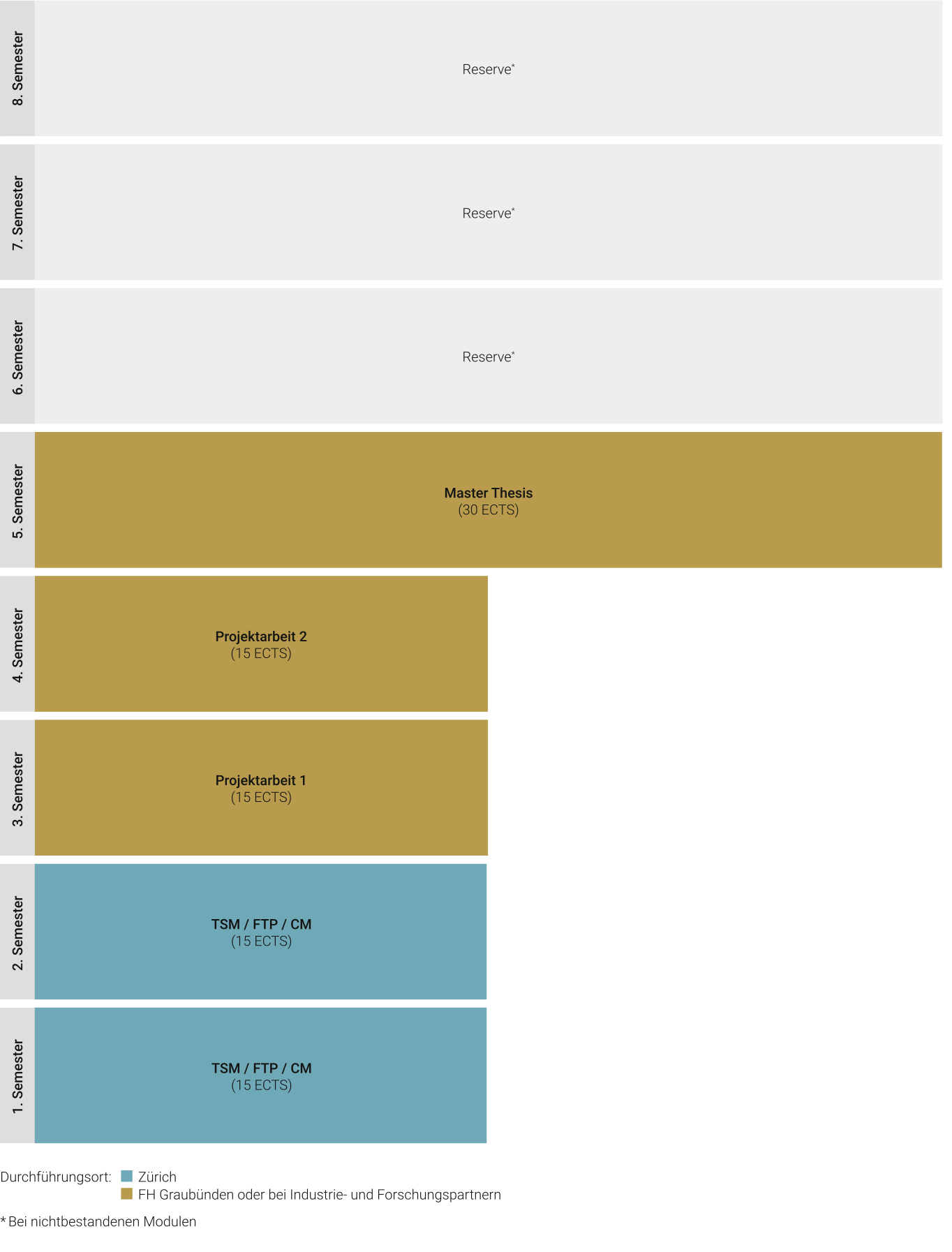
The degree program consists of theory and context modules as well as the specialization with the Master's thesis. The theory and context modules require 30 ECTS credits (around one third), the specialization 60 ECTS credits (around two thirds).
Recommended theory modules
The theory modules comprise 30 of the 90 ECTS credits. The modules are taught by professors from all over Switzerland at various locations. You will complete these modules together with other MSE students.
Here you will find the recommended theory modules for the Civil Engineering MSE profile
Specialist specialization
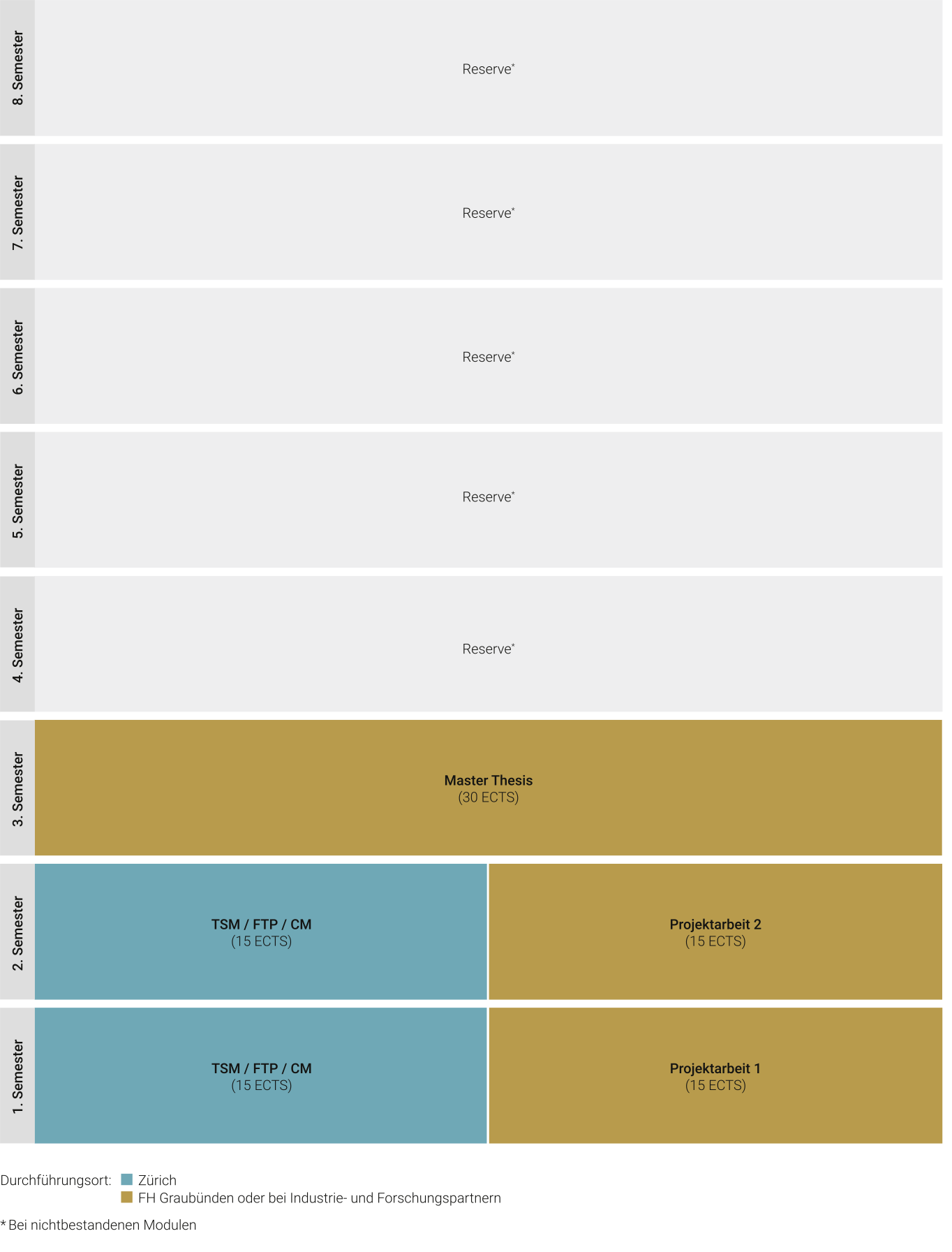
The specialization comprises 60 of 90 ECTS. It consists of two practice-oriented projects (2 x 15 ECTS) and a Master's thesis (30 ECTS). The work can be carried out as part of research projects at the UAS Grisons or with industry partners. The exact topics are determined individually in consultation with your academic advisor.
Admission requirements
For admission to the MSE Engineering, you need a Bachelor's degree or a comparable degree in engineering. The achievements of the entire Bachelor's degree must correspond to an ECTS grade A or B. Admission "sur dossier" is possible for Grade C. Grade D is not permitted.
If you have any questions about the admission requirements, please contact us. We will be happy to help you.
The overall grades of the Bachelor's degrees at the FHGR correspond to the following ECTS grades:
6.0 = A
5.5 = B
5.0 = C
4.5 = D
A -> admitted
B -> approved
C -> sur dossier
D -> not admitted
Recommended Bachelor's degrees:
For the Master of Science in Engineering (MSE) with a specialization in Civil Engineering, you ideally have a Bachelor's degree in Civil Engineering or in a closely related technical discipline.
The following fields of study are particularly suitable:
- Civil Engineering
- Environmental engineering
- Geotechnics / engineering geology
- Infrastructure or transportation engineering
- Hydraulic engineering / hydraulics
- Materials and process engineering (related to civil engineering)
- Mechanical engineering (with a focus on construction or structural mechanics)
Graduates of other technical degree courses may also be admitted, provided they have the necessary technical background. Suitability will be assessed on a case-by-case basis.
Exceptional cases
If the general as well as the subject-specific average corresponds to an ECTS grade C, admission "sur dossier" is possible in justified cases. In the event that performance cannot be assessed on the basis of certificates, an admission interview will be conducted with the applicant. Applicants from abroad must provide proof of German language skills at a conversational level.
Organizational matters
How much does the MSE Engineering at the UAS Grisons cost? Where does the course take place? How many ECTS credits will I receive? How many days do I have classes? What degree will I have after the course?
Tuition fees
The one-time registration fee is CHF 300. This fee will be applied toward the tuition for the first semester. If you do not begin your studies, you must still pay the registration fee. It is non-refundable.
Tuition is:
CHF 960 per semester for students with Swiss or Liechtenstein citizenship.
CHF 1,550 per semester for all other students.
International students who have resided in Switzerland for at least two years prior to the start of their studies, are financially independent, and were not enrolled in any educational program may apply for a reduced tuition fee of CHF 960. This must be reviewed and approved in advance by the University of Applied Sciences of the Grisons.
For students from countries outside of Switzerland, Liechtenstein, the EU, and EFTA, the University of Applied Sciences of the Grisons requires a deposit of CHF 3,000.
The tuition fees do not include: course materials, specialized software, travel, meals, and lodging for field trips, intensive weeks, and the bachelor’s thesis.
You will need your own high-quality laptop. You can obtain recommendations from the program director.
Be sure to also look into financing options, such as scholarships or grants.
Place of study
The contact lessons take place in Zurich, the practical training and research work at the Chur site of the UAS Graubünden or at the industrial partner.
ECTS points
European Credit Transfer and Accumulation System (ECTS)
The European Credit Transfer and Accumulation System (ECTS) is an instrument for creating a European educational area in which students and teachers can move freely. ECTS points are awarded for the workload required to achieve the expected learning outcomes of a course. ECTS points form the basis for the recognition of academic achievements and diplomas between universities.
ECTS points
One ECTS point corresponds to an average student workload of 30 hours. In addition to attending courses, the student workload also includes time spent preparing for and following up on courses, examinations and self-study. In a full-time course, 60 ECTS credits are earned per year, which corresponds to a workload of 1800 hours.
At the UAS Grisons, the Bachelor's degree program comprises 180 ECTS credits, a consecutive Master's degree program 90 ECTS credits.
Duration of study
The MSE Engineering can be studied full-time or part-time. The recommended duration of study is 3 semesters for full-time study and 5 semesters for part-time study (see chart).
The maximum duration of study may not exceed 8 semesters for both full-time and part-time studies. In exceptional cases, an additional semester may be approved. Study interruptions do not count towards the duration of studies. These may not exceed a total of two semesters.
The reserve semesters can be used if modules are not passed.
Language of instruction
Theory (TSM, FTP, CM): English
Project work and Master's thesis: English/German
Study and examination regulations
The regulations of the Bachelor's and Master's degree programs govern the course of study, examination and doctoral modalities.
Registration and advice
Application form
If you would like to register for the program, please send the completed registration form and the required documents to the administration of the UAS Grisons.
Start of studies
Fall semester: September
Spring semester: February
Application deadline
Fall semester: May 31
Spring semester: November 30
Places are allocated according to the date of receipt of the application documents. Applications will also be considered after the application deadline if places are available.
Consulting
Do you have content-related or administrative questions? Would you like study advice? We will be happy to help you.
University of Applied Sciences of the Grisons
Pulvermühlestrasse 57
7000 Chur
Switzerland
Phone +41 81 286 24 86
E-mail mse@clutterfhgr.ch

Administration